Linen is the cool, slightly crumpled cloth that shows up every summer in shirts, sheets and tablecloths. So what is linen fabric, exactly? It is cloth woven from the stem fibers of the flax plant, one of the oldest textile fibers people have ever used, and it behaves quite differently from the cotton most of us grew up wearing.
This guide covers how flax becomes fabric (the slow, surprisingly physical process that explains linen’s price), how it feels and wears, whether linen is breathable, how it stacks up against cotton, and how to read a linen label without getting fooled by “linen-look” cloth.
If you only remember one thing: linen wrinkles because of what it is, and a wrinkle is not a defect.
Linen at a glance
- Fiber type
- Natural cellulose, a bast (stem) fiber
- Source
- Flax plant, Linum usitatissimum
- Feel
- Crisp, cool and dry at first, softer with washing
- Strengths
- Strong, absorbent, breathable weaves, long-lasting
- Weak spots
- Wrinkles easily, little stretch, can shrink if untreated
- Common uses
- Summer shirts and dresses, bedding, towels, table linens
- Care
- Gentle wash around 30C, low or no tumble heat, iron damp
On this page
What is linen fabric made of?
Flax is a slender annual plant grown for two things: its seeds (linseed) and the long fibers inside its stem. Linen comes from the second. Those fibers sit in a layer just under the outer skin of the stalk, which is why textile people call flax a bast fiber. Bast simply means fiber from the stem of a plant rather than from a seed pod (cotton) or an animal (wool, silk). Hemp, jute and ramie are bast fibers too.
Under the microscope, linen is mostly cellulose, the same structural stuff found in cotton and wood. The difference is shape. Cotton fibers are short, soft seed hairs. Flax fiber strands are long and stiff; Britannica gives roughly 30 to 75 centimeters, and a French flax spinner quotes an average of 20 to 90 centimeters. Long fibers make a smooth, strong yarn with that faint natural luster linen is known for, and they also explain why the cloth feels crisp before it is broken in.
On a US care label, “linen” names the fiber, so a garment labeled 100% linen should be made entirely of flax. Anything sold as “linen-look”, “linen-feel” or “linen weave” is describing an appearance and may contain no flax at all (more on that in the label section below).
From flax field to fabric: how linen is made
Getting usable fiber out of a flax stalk takes patience, weather and a lot of mechanical beating. The steps below are the classic sequence; modern mills use machines, but the logic has not changed in centuries.
- Pulling. Flax is pulled up by the roots instead of being cut, so the fibers keep their full length.
- Retting. The stalks are left to partly rot so microbes break down the pectin “glue” holding the fibers to the woody core. In dew retting, mostly used in Western Europe, the stalks lie in the field and dew, rain and soil microbes do the work. Water retting soaks them, and Swiss fiber supplier Swicofil puts that at roughly 6 to 20 days. Stop too late and the fiber weakens and discolors.
- Breaking and scutching. Dried stalks are crushed and then scraped or beaten to knock off the woody bits. Scutching sorts the result into long line fiber, shorter tow, and shives (the woody waste).
- Hackling. Line fiber is combed through sets of pins, which splits and straightens it and pulls out remaining short fibers. The combed fiber is formed into a ribbon called sliver.
- Spinning. Line can be spun wet or dry. In wet spinning, the fiber passes through a hot water bath that softens the remaining pectin, which lets spinners draw out finer, smoother yarn. Tow is spun into coarser, more rustic yarn.
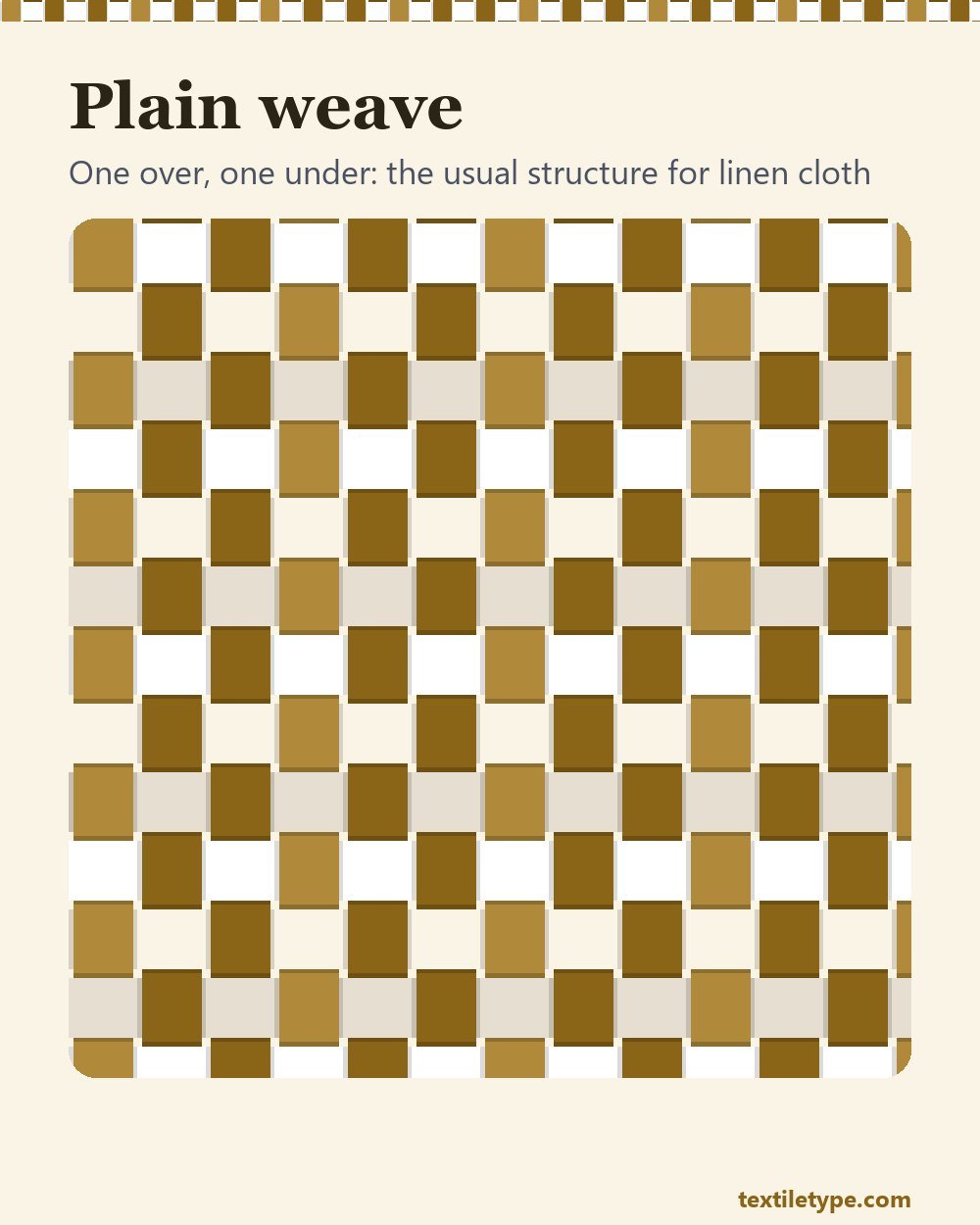
- Weaving and finishing. Most linen is woven, usually in a plain weave. Finishes such as washing or “stonewashing” soften it before sale.

The line versus tow split matters to shoppers. Fine handkerchief linen and smooth shirting are usually spun from long line fiber. Chunkier, slubbier linen (those little thick-and-thin bumps in the yarn) is often made from tow, which is part of its rustic charm and part of why it costs less.
George Washington’s Mount Vernon walks through making linen from flax, which makes the retting, breaking and hackling steps above much easier to picture.
A very old cloth
Linen has a longer résumé than almost any other fabric. In 2009, researchers publishing in Science reported wild flax fibers, some of them dyed, in Upper Paleolithic layers of Dzudzuana Cave in Georgia, dated to roughly 30,000 years ago. Nobody is sure exactly what those fibers became (cords, baskets or clothing are all possibilities), but it shows how early people figured out that flax was worth the trouble.
Later, flax was among the early crops of the Fertile Crescent, and linen became the everyday cloth of ancient Egypt, where it was also used to wrap the dead. Britannica notes evidence of flax use in prehistoric lake dwellings in Switzerland, credits Phoenician traders with carrying linen to Gaul and Britain, and says the Romans spread linen manufacture across their empire. In North America, the rise of the cotton industry pushed linen aside, and it has been a smaller, more premium fiber ever since.
How linen feels and performs
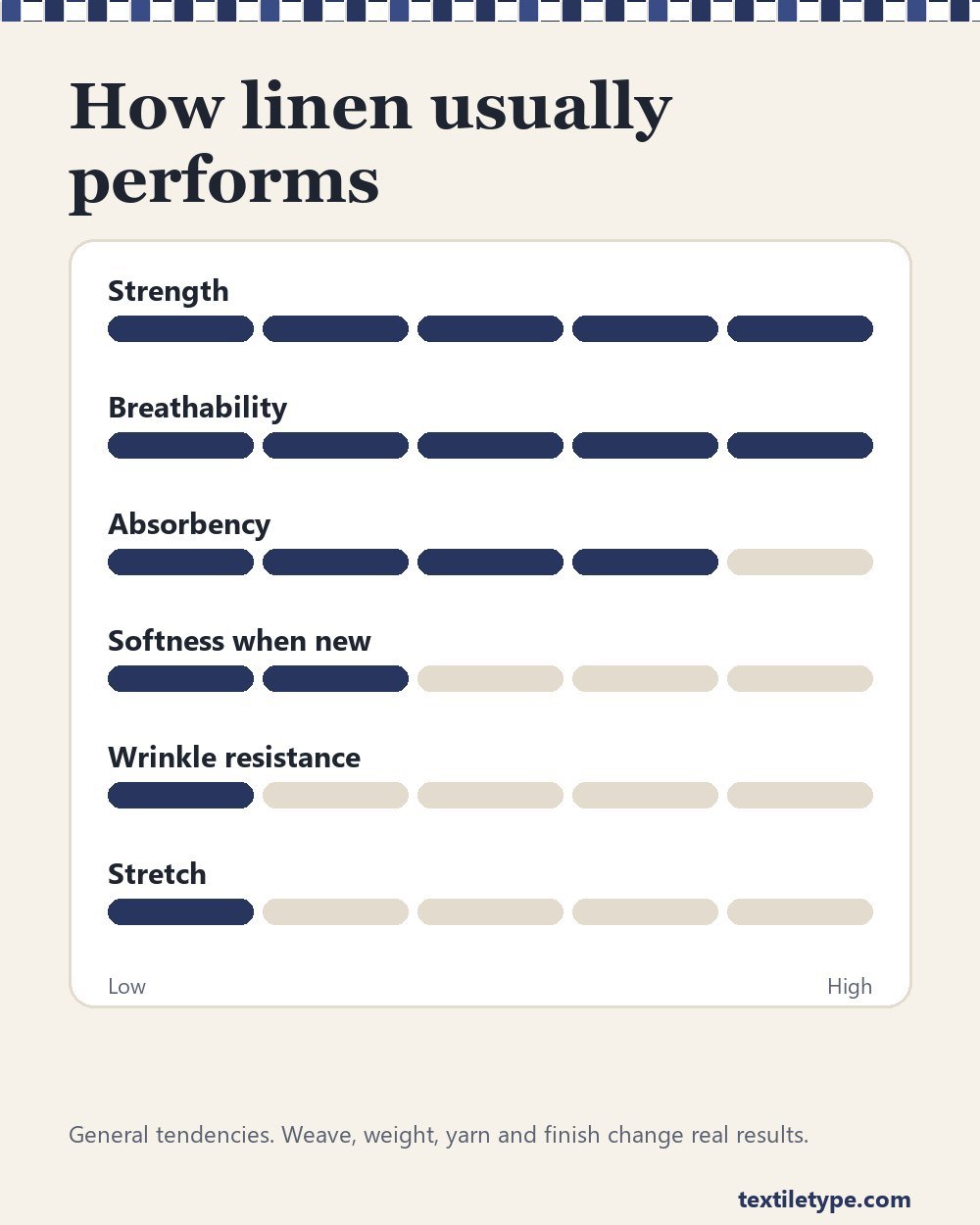
New linen feels crisp, cool and a little dry in the hand. With each wash the fibers relax and the cloth gets softer and more fluid, which is why old linen napkins feel so much nicer than new ones. The European flax-linen industry’s own care guide makes the same point: linen becomes more flexible and softer with washing.
Is linen breathable?
Usually, yes, and that is the whole reason people reach for it in July. Two things help. The flax fiber itself absorbs moisture readily, and linen for summer clothing is typically woven fairly loosely from smooth, stiff yarns that stand slightly away from the skin instead of clinging. Air moves through and sweat does not sit against you in a damp layer. A dense, heavy linen canvas will feel much warmer than a gauzy shirt, so breathability depends on the weave and weight as much as the fiber.
Why linen wrinkles so easily
Flax has very little elasticity. When you bend a linen fiber, it does not spring back the way wool or polyester does, so every crease stays put until moisture and heat relax it again. Finishes and blends can reduce wrinkling, but 100% linen will always crumple. Many people treat that relaxed, rumpled look as part of the appeal.
Strength and durability
Linen is one of the strong natural fibers, and Swicofil notes that it is stronger wet than dry, which is handy for towels and kitchen cloths that spend their lives damp. The weak spot is repeated sharp folding: because the fiber is stiff, a crease ironed into the same place over and over can eventually wear through. Rolling or loosely folding stored table linens helps.
Linen vs cotton: the quick comparison
Both are plant cellulose, both can be washed at home, and both breathe. The differences come from fiber length and stiffness. Here is how they usually compare.
| Trait | Linen | Cotton |
|---|---|---|
| Fiber source | Stem (bast) of the flax plant | Seed hairs of the cotton plant |
| Fiber length | Long strands | Short staple |
| Hand when new | Crisp, cool, slightly textured | Soft from day one |
| Feel in heat | Very airy in loose weaves | Comfortable, can feel clingy when damp |
| Wrinkling | High | Moderate |
| Stretch | Very little | A little more |
| Strength | High, and stronger when wet | Good, also stronger when wet |
| Price | Usually higher | Usually lower |

Pick linen if you run hot, want something that lasts for years and do not mind creases. Pick cotton if you want soft-out-of-the-bag comfort, a sharper pressed look with less effort, or a lower price. A linen-cotton blend lands in between: softer and less wrinkly than pure linen, with some of its texture.
Where linen comes from, and why it costs more
Fiber flax likes a cool, damp growing season. The Alliance for European Flax-Linen and Hemp, the industry body formerly known as CELC, says Western Europe produces around three quarters of the world’s scutched flax fiber, mostly along a coastal strip running from Brittany in France to the Netherlands, with France the largest producer. Much of that fiber travels before it becomes cloth: trade data from the Observatory of Economic Complexity show China as the biggest importer of scutched flax fiber in 2023. So the country of origin on a linen label tells you where the garment was made, not necessarily where the flax grew.
The price follows from everything above. Flax is a small crop next to cotton (the alliance puts flax-linen at well under 1 percent of world textile fiber), it must be pulled rather than cut, retting depends on the weather, and fiber extraction takes several mechanical steps before spinning even starts. Fine, long line linen costs more again than rustic tow linen.
Linen label terms decoded
Linen’s popularity means plenty of cloth borrows the word. Here is what the common phrases actually tell you.
| On the label | What it means | What to expect |
|---|---|---|
| 100% linen | All fiber is flax | Crisp, breathable, wrinkles freely |
| Linen/cotton (e.g. 55/45) | Blend, fibers listed by weight, largest first | Softer and slightly less wrinkly |
| Linen/viscose | Flax blended with a wood-pulp rayon | More drape and sheen, check care label for cooler washing |
| Linen-look, linen-feel, linen weave | Describes appearance only | Often polyester, viscose or cotton with slubby yarns |
| Washed or stonewashed linen | Pre-laundered or tumbled at the mill | Softer from the start, usually less shrinkage later |
If you see viscose listed, it helps to know what that fiber does; our guide to what viscose fabric is explains why it drapes beautifully but needs gentler washing than linen.
Linen care basics
Linen is easy to wash at home. The trick is going easy on heat and spin. These steps follow the European flax-linen industry’s own care advice; always defer to the garment’s label.

- Wash: a delicate or gentle cycle around 30C with a detergent free of bleaching agents. Sturdy white household linen can often take hotter water; check the label.
- Spin: low. Hard spinning and wringing set deep creases.
- Dry: air-dry out of direct sun, or tumble on a low, gentle setting and pull items out while slightly damp. High dryer heat is the usual cause of shrinkage.
- Iron: medium-high to high, on the reverse side, while the cloth is still a little damp.
Gentleman’s Gazette explains linen as a summer clothing fabric, a useful companion if you are shopping for linen shirts, trousers or jackets.
Browse more fiber and fabric explainers in our fabric guides, or read about Textile Type and how these guides are researched.
Linen fabric FAQ
Is linen better than cotton for hot weather?
For most people, yes. Loosely woven linen lets air through and does not cling when you sweat, while cotton can feel heavy once damp. A dense linen will still feel warm, so weight and weave matter.
Why is linen so expensive?
Flax is a small crop that is pulled rather than cut, retted in the field and processed through several mechanical steps before spinning. Long line linen, the finest grade, costs more than rustic tow linen.
Does linen get softer over time?
Yes. Washing and wear relax the stiff flax fibers, so linen gets noticeably softer and drapier with use. Pre-washed or stonewashed linen starts out softer.
How can you tell if fabric is real linen?
Check the fiber content label first. By hand, real linen feels cool, crisp and slightly uneven with small slubs, and it creases quickly when you scrunch it.