Georgette is the sheer fabric with a grainy, faintly pebbled surface that you find on flowing blouses, saris and evening dresses. Run it between your fingers and it feels crisp and slightly rough rather than slick. That texture is the whole story of what is georgette fabric: a lightweight, see-through crepe woven from very tightly twisted yarns, which give it bounce, a matte look and a few quirks you should know before you wash it.
Here you will find how georgette is built, where the name came from, how it moves on the body, whether it stretches, how it compares with other crepes, which fiber to choose, and the one care mistake (getting it too wet) that shrinks it.
Georgette at a glance
- Family
- Crepe: a sheer, lightweight crepe fabric
- Yarns
- Highly twisted S and Z crepe yarns in both directions
- Finish
- Dull, grainy, slightly springy
- Fibers
- Silk (original), polyester, viscose
- Stretch
- Little, unless spandex is added
- Biggest risk
- Shrinkage when washed, especially silk and viscose
On this page
What is georgette fabric? A sheer member of the crepe family
To understand georgette, start with crepe. Britannica describes crepe as a family of fabrics, in many weights and constructions, that all share a crinkled or granular surface. That surface can come from the weave, from chemical treatment or from embossing, but classic crepes get it from crepe yarn: a hard-twist yarn with more twists per inch than ordinary yarn, or yarns twisted alternately to the left (S) and right (Z). Britannica lists georgette among the popular crepes, alongside crepe de chine and crepe-back satin.
What sets georgette apart is that it uses those high-twist yarns in both directions, lengthwise and crosswise, with S and Z twists alternating. When the woven cloth is finished, the yarns try to untwist and pull the fabric into a fine, all-over crinkle. Woven loosely and lightly, the result is a crepe you can see through: sheer, lightweight and dull rather than shiny.
Where the name comes from
Unusually for a fabric, georgette is named after a person. The usual account credits Georgette de la Plante, a French dressmaker of the early 20th century (some sources spell it Laplante). The Oxford English Dictionary’s earliest citation for the word dates to 1912, and the fabric was first made in silk. By the early 1920s it was turning up in fashionable dresses, including a black georgette design by Jean Patou from around 1921.
Much of the georgette sold today is polyester or viscose, which brought the price down, and the polyester versions are far more forgiving in the laundry.
How georgette feels and moves
Georgette has a very light, drapey hand, so it suits loose, flowing garments more than tailored ones. Compared with its close cousin chiffon, it is springier and less lustrous, and its hand is a little denser. Our chiffon fabric guide covers that smoother, shinier sibling if you are torn between the two; the short version is that georgette trades some sheen and transparency for texture and body.
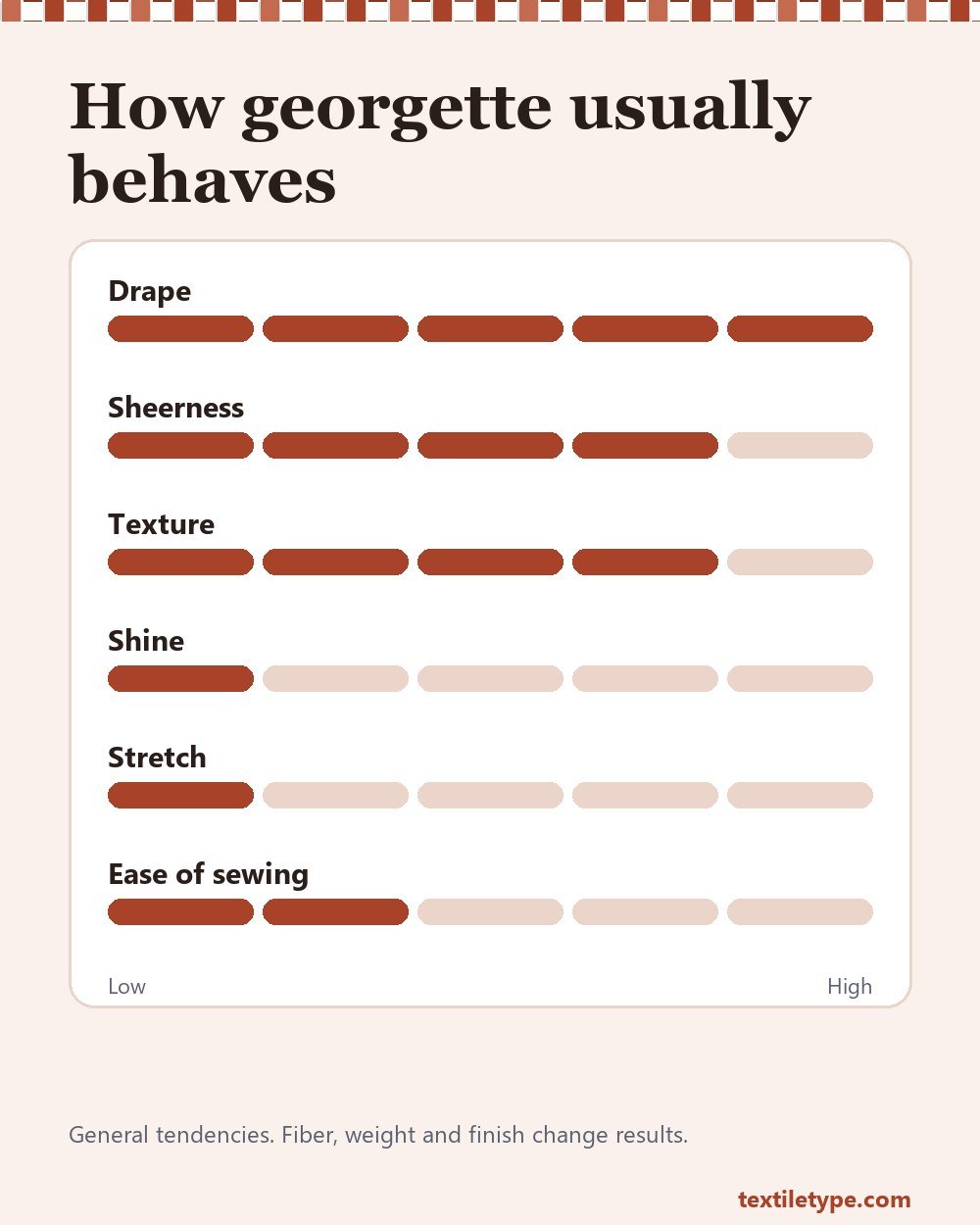
That grainy surface has a practical side: it tends to give a little more grip than glossy, slick fabrics. It is still a delicate, sheer cloth, so plan on a lining or slip for anything you do not want to be see-through.
A fabric masterclass that introduces georgette and shows how to sew it, so you can see the drape and texture up close.
Is georgette stretchy?
Not much. Standard georgette is a woven fabric, and woven fabrics have very little stretch along the straight grain. The high-twist crepe yarns give it a slight springiness and a touch of give, but that is closer to bounce than stretch, and some retailers describe their georgette as having no stretch at all.
There are exceptions worth knowing about:
- Stretch georgette blends a little spandex into polyester or silk georgette for extra movement. The fiber line on the label will list it.
- Some silk georgettes are sold with noticeable crosswise stretch from the yarn construction.
- Bias cuts (cutting on the diagonal of the weave) give any woven, georgette included, more give and a clingier drape.
If you are sewing a fitted bodice and your pattern calls for a stretch woven, check for spandex in the fiber content or size up. Plain georgette will not ease over the body like a knit.
Georgette vs crepe (and where chiffon fits)
“Georgette vs crepe” is a slightly unfair matchup, because georgette is a crepe. The useful question is how it compares with the other crepes on the shelf. The biggest dividing lines are how sheer the fabric is and whether the crepe yarns run in one direction or both.

| Fabric | Where the crepe yarns go | Sheerness | Surface | Typical uses |
|---|---|---|---|---|
| Georgette | Both directions, alternating S and Z | Sheer to semi-sheer | Dull, grainy, springy | Blouses, dresses, saris, overlays |
| Crepe de chine | Mainly the crosswise (filling) yarns | Usually not see-through | Smoother, fine crinkle, soft sheen | Blouses, scarves, linings |
| Heavier dress crepes | Varies; may use weave or finish instead | Opaque | Pebbly, more body | Dresses, trousers, suiting |
| Chiffon (for reference) | Crepe yarns, plain weave | Very sheer | Smoother, more lustrous | Overlays, scarves |
Britannica describes crepe de chine as a light, fine, plain-woven fabric whose crepe texture comes from filling yarns twisted in opposite directions. Georgette puts that twist in both sets of yarns, which is why it is more crinkled and more open. A full georgette and chiffon head-to-head is coming in a separate guide; for most shoppers, the texture test (grainy means georgette, smoother means chiffon) gets you there.
Silk, polyester or viscose georgette: which to buy
The fiber changes price, comfort and how scared you need to be of water. Silk georgette is relatively delicate, while synthetic versions tend to be more resilient.
- Pick silk georgette if you want the original hand and drape for a special piece and are happy to dry clean it.
- Pick polyester georgette if you want easy care, a lower price and a fabric that shrugs off everyday wear; it is the one most likely to be labeled hand or machine washable.
- Pick viscose (rayon) georgette if you want a softer, more absorbent feel than polyester at a lower price than silk, and you will treat it gently, since rayon crepes shrink readily when wet. Our viscose guide explains why.
- Pick stretch georgette if the garment is fitted and you need some ease.
If comfort in heat matters, keep in mind that polyester absorbs very little moisture compared with silk or viscose; the polyester guide covers what that means in practice.
Why georgette shrinks, and how to wash it safely
All that twist stored in the yarns is waiting for an excuse to relax, and water is the excuse. The Drycleaning and Laundry Institute warns that crepe is extremely susceptible to shrinkage when exposed to moisture, especially crepes containing silk, wool or rayon. Even home stain removal can cause localized shrinkage, which is how a small spot turns into a small pucker. That is why most crepe garments carry a dry-clean label.
How much can it shrink? There is no standard figure, but one silk supplier lists pre-wash shrinkage of about 13 to 15% for silk georgette, far more than for flat silks like taffeta. Treat that as a ballpark, not a promise.
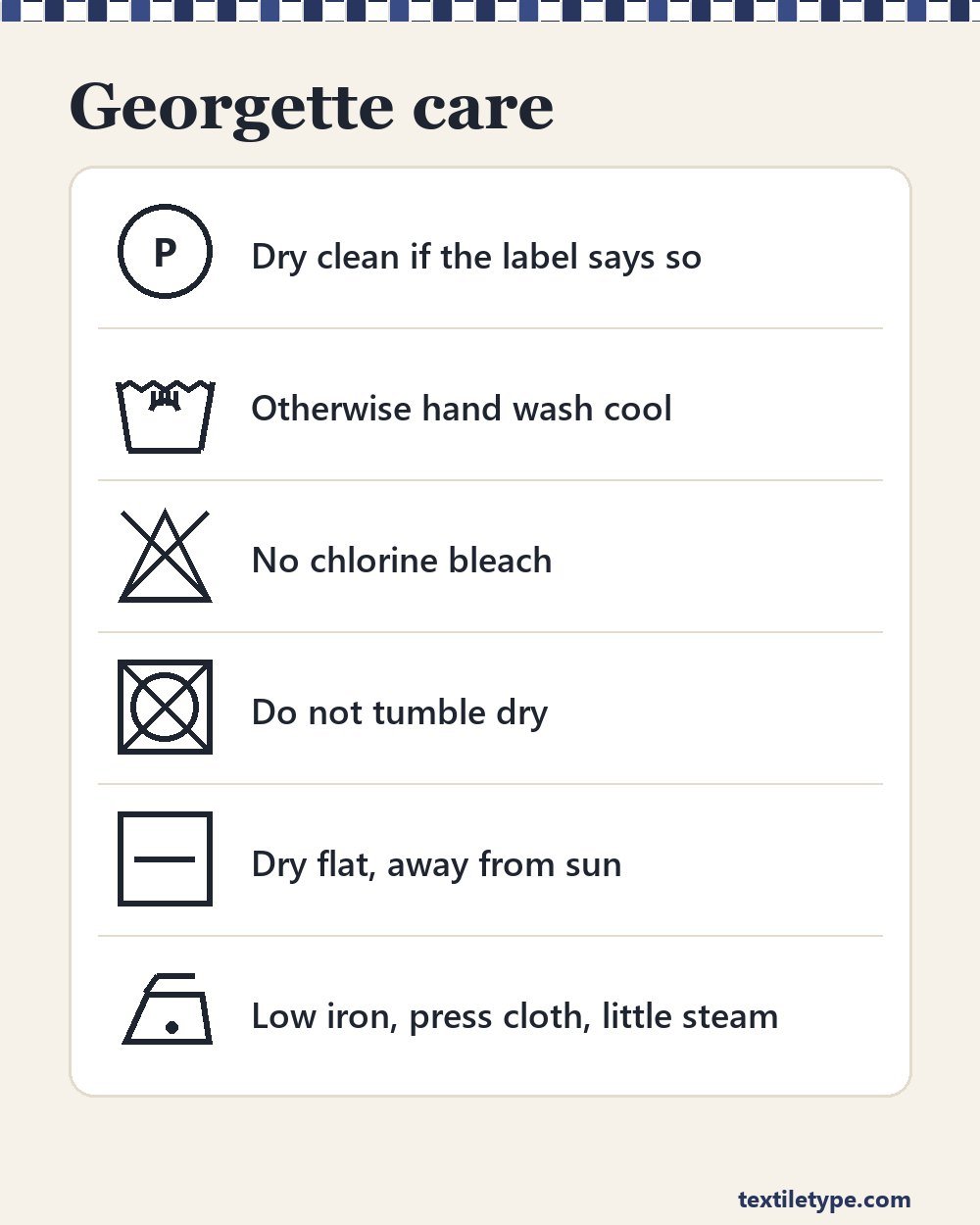
If the label allows washing
- Wash by hand in cool water with a mild detergent, keeping the soak short.
- Rinse thoroughly, then press water out gently in a towel without wringing.
- Air dry flat or on a padded hanger, away from sun. Do not tumble dry.
- If it has drawn up, gently ease (block) it back to shape while slightly damp.
- Press on low heat with a press cloth, from the wrong side, keeping steam to a minimum.
Pre-shrinking yardage before you sew
If you are making a washable garment, wash and dry the fabric the same way you plan to launder the finished piece before you cut. Measure a marked square before and after so you know how much it moved. If the fabric is silk and you plan to dry clean the garment, skip the wash and let the cleaner handle it.
Sewing georgette: what is different
Georgette’s grainy surface tends to grip a little better than smooth chiffon under the presser foot. It still frays, still shifts and still shows every crooked seam through its sheer layers.
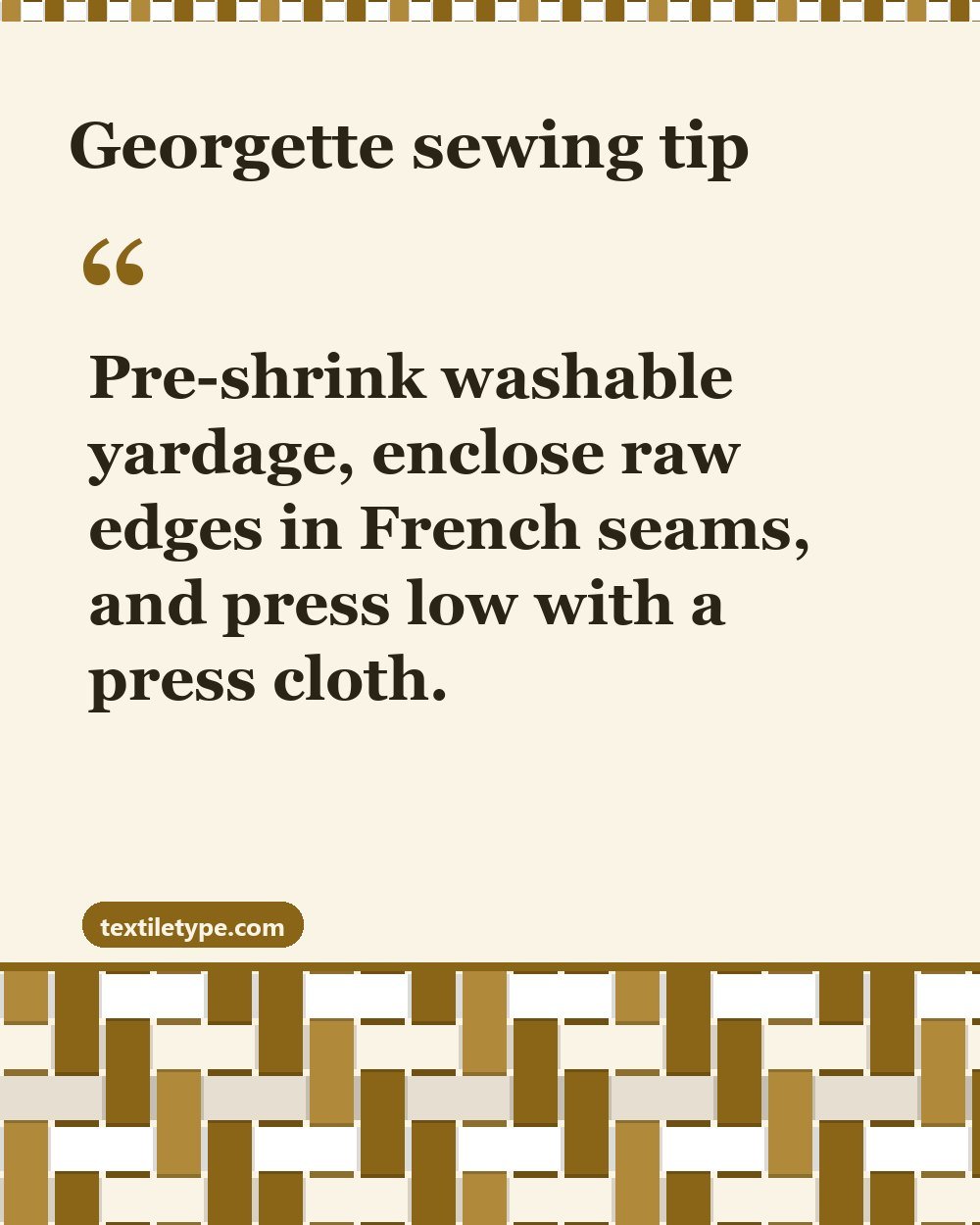
- Finish every seam. Fine georgette yarns fray, so retailers recommend French seams, zigzag finishes or pinking.
- Stabilize while cutting. Cut a single layer, use weights, and keep the grain straight; the crinkle can hide a skewed grain until the garment hangs crooked.
- Use a fine, sharp needle and a slightly shorter stitch to avoid puckers.
- Line or underline thoughtfully. A lining in a matching color keeps the drape while adding modesty.
A fit and design teacher covers techniques for sewing georgette and other thin fabrics, handy before cutting into good yardage.
Planning a dressy look that mixes textures? Georgette pairs well over a smooth satin lining, where the satin adds weight and the georgette adds soft texture. For more fabrics, browse the full set of Textile Type fabric guides.
Georgette FAQ
Is georgette see-through?
Usually, yes. Standard georgette is sheer to semi-sheer, so blouses and dresses are normally lined. Heavier weights and darker colors look less transparent.
Is georgette the same as chiffon?
No, though they are close relatives. Both are sheer and use crepe yarns, but georgette is grainier, springier and less shiny, while chiffon is smoother and more lustrous.
Is georgette good for hot weather?
It is light and airy, which helps. Silk and viscose georgette absorb moisture better than polyester georgette, which some people find clammy in heat.
Can you iron georgette?
Yes, gently. Use a low setting and a press cloth, iron from the wrong side, and go easy on steam, since moisture can make crepe fabrics shrink.