Modal is the fabric behind a lot of “softest thing I own” claims: the boxer briefs, the sleep tee, the loungewear that feels faintly cool when you first pull it on. The plain answer to what is modal fabric: a type of rayon made from wood pulp, engineered to stay stronger when wet than ordinary rayon, which is why it can survive a washing machine.
Below you’ll find what sets modal apart from viscose and cotton, whether it breathes, the honest answer on shrinking, how to read modal blends on a tag, and how to wash and sew it without wrecking that silky hand.
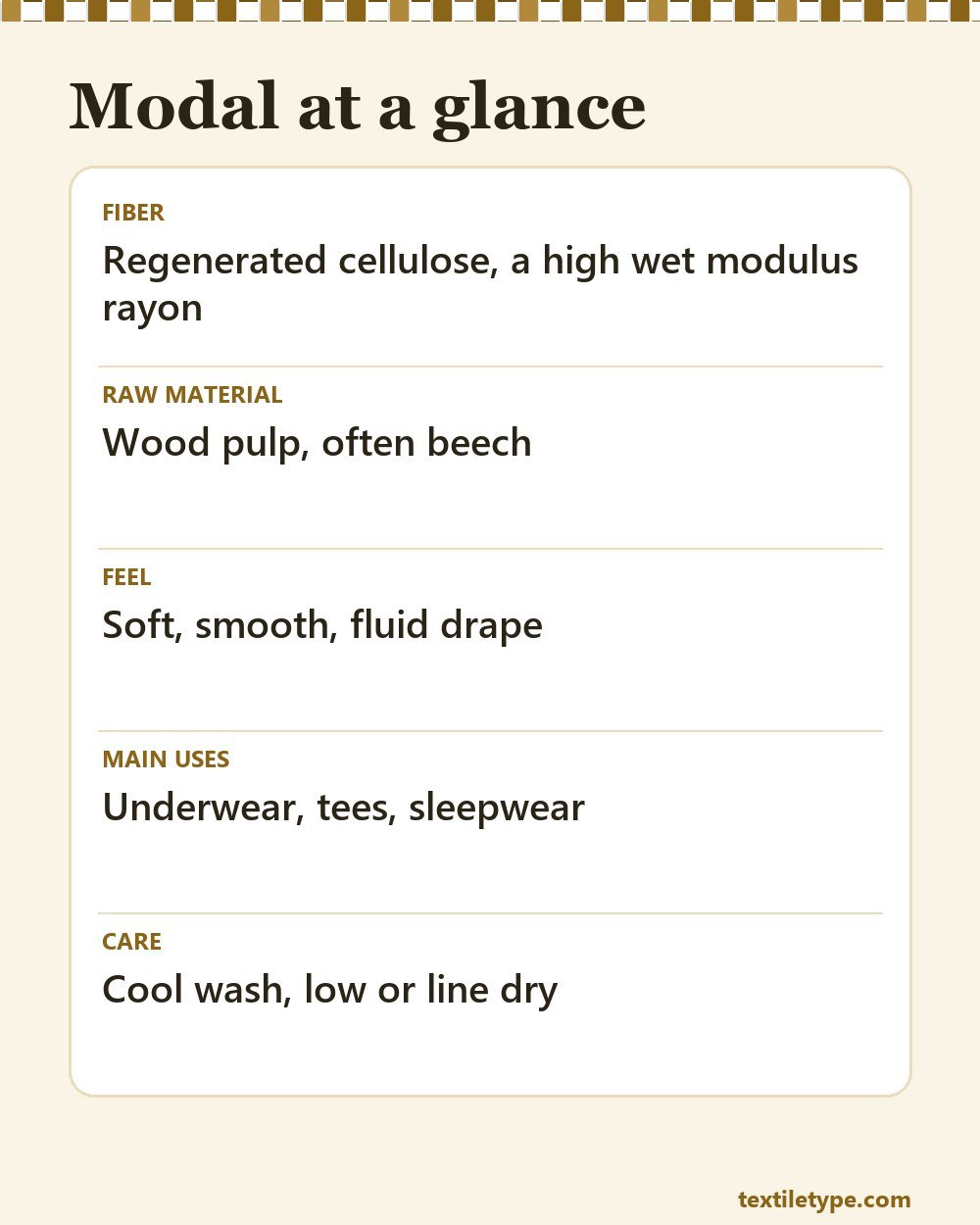
Modal at a glance
- Fiber type
- Regenerated cellulose; a high wet modulus rayon
- Usual raw material
- Wood pulp, often from beech
- Feel
- Very soft, smooth, fluid drape, subdued sheen
- Where you’ll see it
- Underwear, T-shirts, sleepwear, loungewear
- Often blended with
- Spandex, cotton, polyester
- Care
- Cool wash, low or line dry, cool iron
On this page
What is modal fabric? A rayon that keeps its grip when wet
Modal belongs to the rayon family, which the Federal Trade Commission defines as manufactured fiber composed of regenerated cellulose. Cellulose is the structural stuff of plants. To make rayon, a factory dissolves wood pulp into a thick liquid and then reforms it into fibers, so the result is plant-based in origin but very much made in a plant of the other kind.
What earns modal its own name is a lab measurement. The international fiber-naming standard, ISO 2076, defines modal as a cellulose fiber with a high breaking strength and a high wet modulus. “Wet modulus” is how hard a fiber resists stretching when it’s soaked. Ordinary rayon goes limp and stretchy when wet, which is exactly when your washing machine is pulling on it. Modal holds firm.
The American Fiber Manufacturers Association describes high wet modulus rayon as highly modified viscose rayon with greater dimensional stability in washing. In everyday terms: it keeps its size and shape better.
Where does the wood come from? The best-known producer, Lenzing in Austria, sells modal under the TENCEL Modal and LENZING Modal names. It says its fibers come from certified or controlled wood sources, and beech is among the species it uses, with some TENCEL Modal made in Austria predominantly from beech. Other mills make modal too, so “modal” on a label does not by itself tell you the tree, the mill or the sourcing standard.
ShirtSpace gives a quick apparel-focused explanation of what modal is and why it shows up in T-shirts.
Modal vs viscose vs cotton
Modal is often pitched as “better viscose”, and the comparison is fair as far as it goes. Both start as dissolved wood cellulose; modal is the modified, tougher version. Our full guide to viscose covers the parent fiber. Here’s how the three compare in general terms.
| Trait | Modal | Viscose (regular rayon) | Cotton |
|---|---|---|---|
| Origin | Wood pulp, modified viscose process | Wood pulp, standard viscose process | Seed fiber from a plant |
| Strength when wet | Good; high wet modulus by definition | Weak; stretches easily when wet | Good; cotton gets stronger wet |
| Shape in the wash | More stable | Can shrink or stretch unless treated | Shrinks if not preshrunk |
| Absorbency | High, but below regular rayon | Very high | High |
| Hand and drape | Silky, fluid | Silky, fluid, can feel limp | Soft to crisp, more body |
| Typical price | Higher than viscose | Low | Wide range |
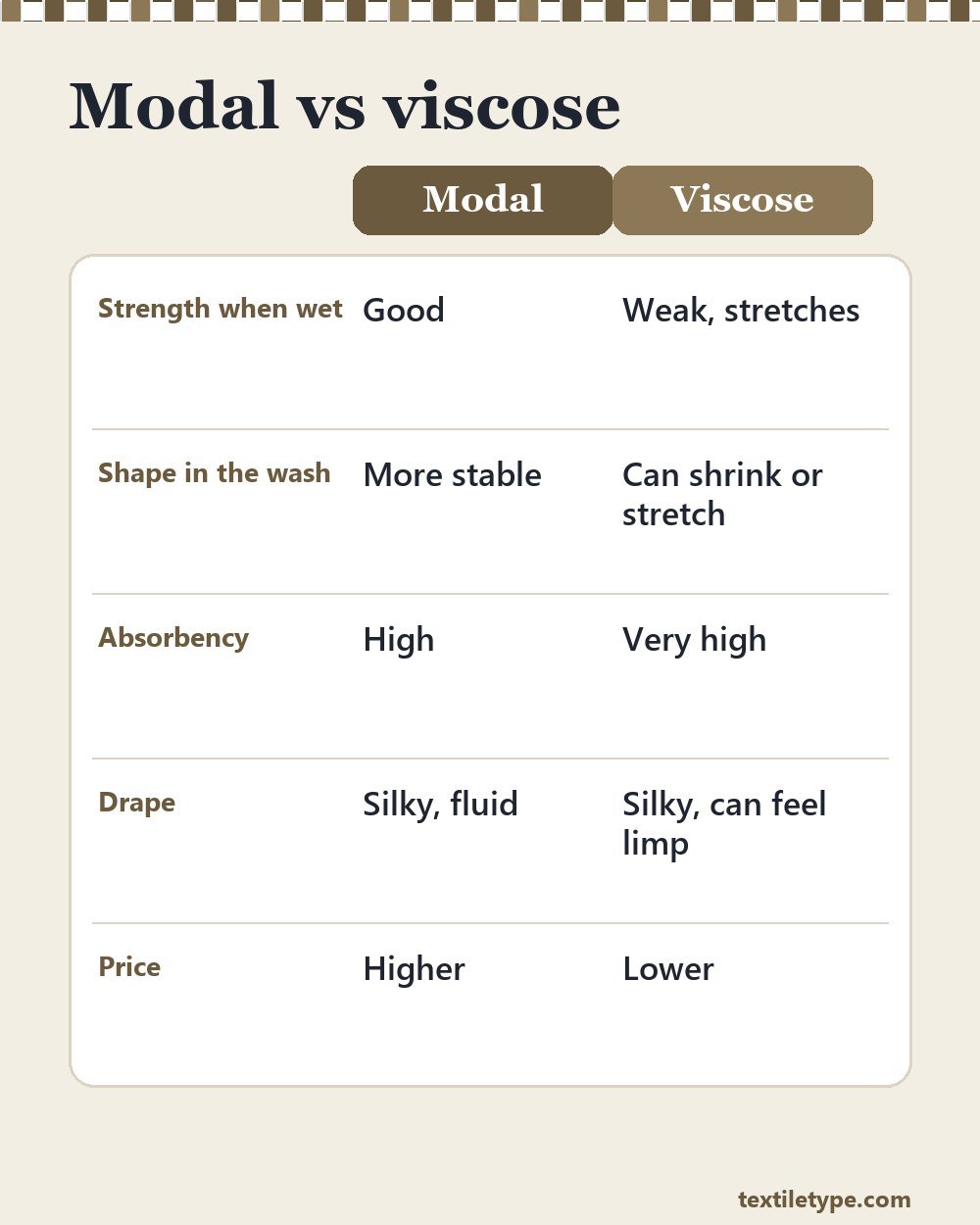
The University of Georgia Extension puts numbers on the gap: high wet modulus rayon can be up to 50 percent stronger than conventional rayon and is more resistant to sunlight. It also notes that modal behaves much like cotton in use while keeping a good drape. Cotton gets stronger when wet, which is one reason it tolerates rough laundering so well.
How modal feels and wears
Modal’s reputation rests on its hand, the textile word for how a fabric feels when you touch it. It’s smooth, cool at first contact, and drapes close to the body rather than standing away from it. UGA Extension describes the luster of high wet modulus rayon as subdued, so modal tends to read soft-matte rather than shiny.
Lenzing claims that fabrics made with its TENCEL Modal fibers are twice as soft as cotton and that the softness lasts through repeated washing and drying. That’s a manufacturer claim based on its own testing, so treat it as a direction rather than a guarantee, and remember that knit structure, yarn and finish matter as much as the fiber.
A few wear patterns to expect:
- Cling. That fluid drape shows everything. Thin modal jersey skims the body, which is lovely for sleepwear and less lovely for a fitted tee you meant to hide in.
- Wrinkles. Modal knits shrug off creases better than woven rayon, but woven modal still wrinkles.
- Bagging. Pure modal knits can relax at the knees and elbows over a day. A few percent of spandex is the usual fix.
- Mildew. Like other cellulose fibers, it can mildew if stored damp.
Is modal breathable?
Generally, yes, and comfortably so. As a cellulose fiber, modal soaks moisture into the fiber itself instead of leaving it on the surface. That makes it feel dry against skin during ordinary wear and sleep. For context, the trade’s standard commercial moisture regain figure for rayon is 11 percent, and UGA Extension notes that high wet modulus rayon absorbs somewhat less than conventional rayon, so modal sits in the absorbent camp but not at the top of it.
Two things change the answer in practice:
- Fabric weight and knit. A light, open jersey breathes better than a dense, heavy one. A GSM figure, where a seller lists it, gives you a clue before you buy.
- The blend. Every percent of spandex or polyester you add lowers absorbency. A 50/50 modal and polyester tee will dry faster but feel less cool than 100 percent modal.
Does modal shrink?
It can, but less readily than regular viscose. The wet strength that defines modal is what keeps it from stretching out and then drawing up in the wash, and AFMA credits high wet modulus rayon with greater dimensional stability in washing. That’s not a promise of zero change. Knits in particular can tighten up a little, especially in their first few washes.
The three things most likely to shrink a modal garment:
- Hot water. Heat raises the odds that a cellulose knit draws up, which is why cool washes are the safe default.
- A hot dryer. Tumbling hot and bone-dry is the classic way to lose a size in a cellulose knit.
- Hard agitation. Long, heavy cycles rub and pull the knit loops.
To keep a modal piece the size you bought it:
- Wash cold or cool on a gentle or short cycle.
- Use a mesh bag for underwear and thin tees.
- Tumble dry low and pull it out while slightly damp, or lay it flat or hang it.
- Smooth it into shape by hand before it finishes drying.
If the garment that shrank was mostly synthetic, the cause is different; our guide on whether polyester shrinks explains why.
Reading modal blends on the label
Pure modal is less common than you might think. Most of what you’ll buy is a blend, and the label tells you what to expect. Under US rules, fibers making up 5 percent or more of the weight are listed in order of predominance; a smaller amount can be named when it does a functional job, which is why you’ll see “5% spandex”.
| Label reads | What it usually means for you |
|---|---|
| 95% modal, 5% spandex | The underwear and legging classic: soft, stretchy, recovers its shape. |
| Cotton and modal (for example 50/50) | More body and structure than pure modal, softer than plain cotton. |
| Polyester and modal | Cheaper and quicker drying, with a little less of modal’s cool, absorbent feel. |
| TENCEL Modal, LENZING Modal | Brand names for modal made by Lenzing. |
| Micro modal, TENCEL Modal Micro | Finer fibers, used for lighter, even softer fabrics. |
| High wet modulus (HWM) rayon | The technical family name; modal is its best-known member. |
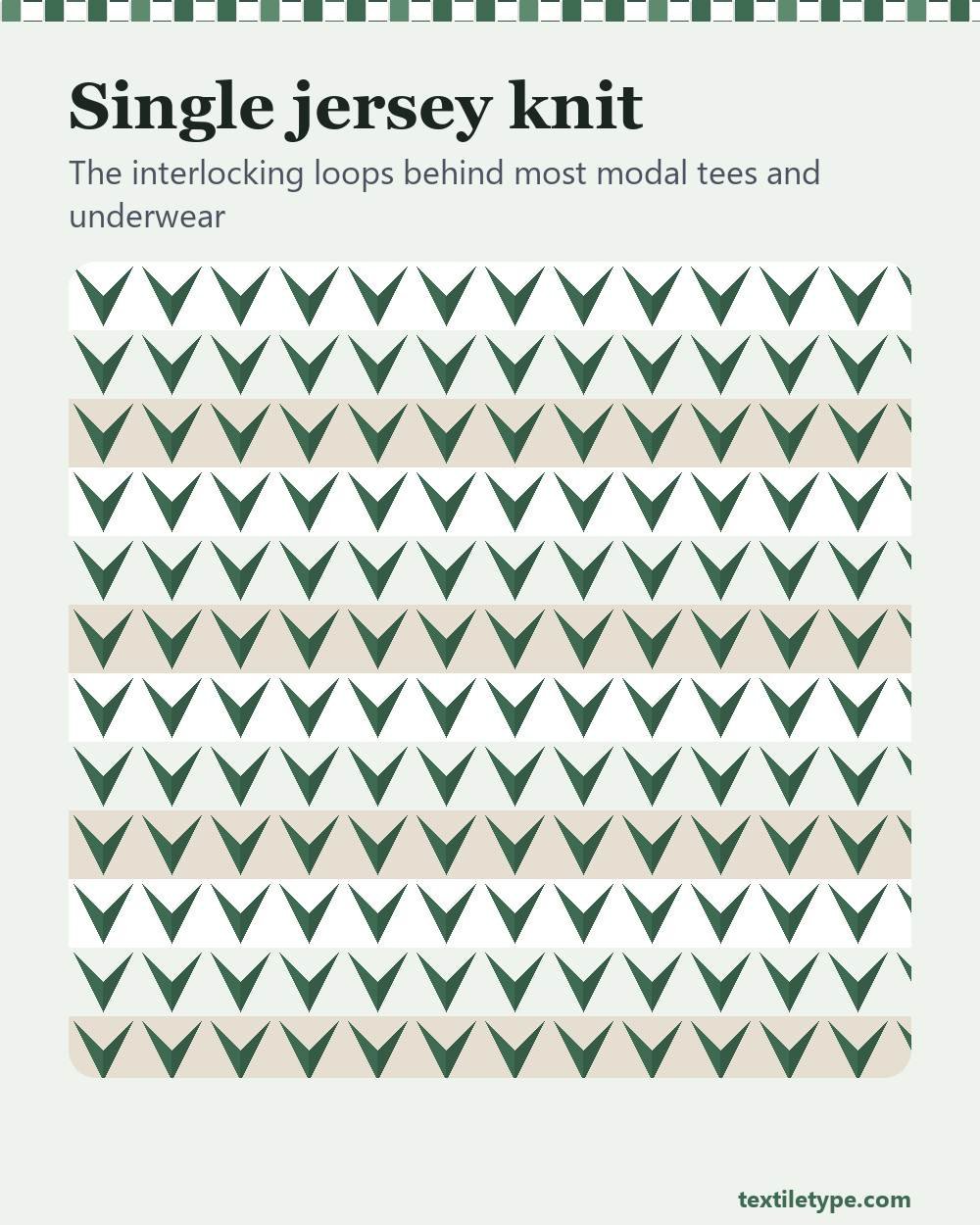
Most modal is sold as a knit, usually single jersey. If knit terms are new to you, our guide to jersey fabric explains the structure.
How to wash modal so it stays soft
Modal is machine washable in most cases, which is the whole point of its wet strength. The aim is to protect its smooth surface and keep its size.
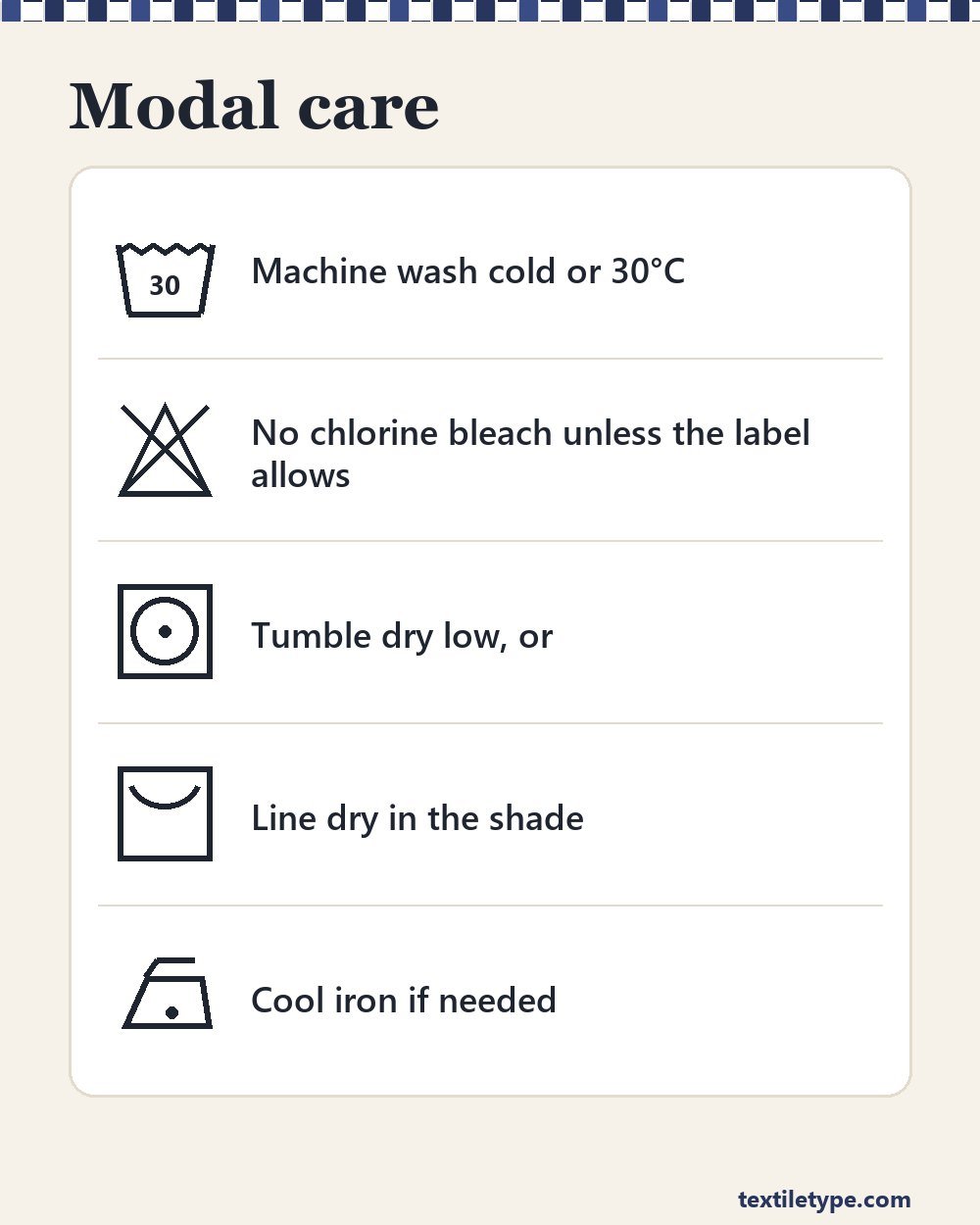
- Water: cold or 30°C (86°F).
- Detergent: a regular mild detergent; skip heavy doses that leave residue in soft knits.
- Bleach: UGA Extension advises avoiding chlorine bleach on high wet modulus rayon unless the label says it’s safe.
- Drying: low heat or line dry in the shade.
- Ironing: modal needs a lower iron temperature than cotton. Most knits need no ironing at all.
- Storage: fold knits rather than hanging them, so the shoulders don’t stretch, and store only when fully dry.
Sewing with modal jersey
Modal jersey is a joy to wear and a mild challenge to sew. It’s slippery, it curls at cut edges, and it stretches if you so much as look at it. These habits help:
- Prewash the yardage the way you’ll wash the finished garment, so any shrinkage happens before you cut.
- Cut flat. Keep all the fabric on the table, use pattern weights and a rotary cutter, and avoid letting yardage hang off the edge and stretch.
- Use a ballpoint or stretch needle so the needle slips between knit loops instead of piercing them.
- Choose stretchy seams: a serger, or a narrow zigzag or stretch stitch on a regular machine.
- Stabilize shoulders and necklines with clear elastic or stay tape to stop them growing.
- Press, don’t iron, at a low setting, lifting the iron instead of sliding it.
Sew PDF shares tips for sewing stretchy jersey that, as the title says, also apply to rayon and modal.
For other fibers and fabric types, browse the full set of fabric guides.
Modal fabric FAQ
Is modal a natural or synthetic fabric?
Neither, strictly. Modal is a manufactured fiber made from natural cellulose, usually wood pulp, so it’s often called semi-synthetic or regenerated. Chemically it’s still cellulose, not plastic.
Is modal better than cotton?
It’s softer and drapier, and it keeps its shape better than regular rayon. Cotton is sturdier, cheaper and tolerates hot washing, so the better pick depends on whether you want silkiness or toughness.
Does modal pill?
It can, like most soft knits, especially where it rubs against bags or seatbelts. Gentle washing in a mesh bag and turning garments inside out reduce the friction that causes pills.
Is modal the same as TENCEL?
TENCEL is Lenzing’s brand, and it covers two different fibers: TENCEL Modal and TENCEL Lyocell. So TENCEL Modal is modal, but not all TENCEL is modal, and not all modal is TENCEL.
Sources and further reading