Polyester vs cotton is the most common fabric choice you will make without noticing, because almost every shirt, sheet and sock drawer holds both. The quick verdict: cotton usually wins for skin comfort, sleep and anything near heat, while polyester wins for sweaty workouts, travel and clothes that must look neat with zero effort.
Below you get a use-by-use verdict, a side-by-side table, the reasons behind each win (sweat, odor, stains, wrinkles, heat), an honest look at blends and the environmental trade-offs, and a “choose this if” list you can take shopping. For the background on the synthetic itself, see our guide to what polyester fabric is.
Keep one caveat in mind throughout: knit or weave, yarn and finish can move a fabric a long way from its fiber’s reputation.
Polyester vs cotton at a glance
- Cotton is
- A natural cellulose fiber from the seed hairs of the cotton plant
- Polyester is
- A synthetic fiber, usually PET (polyethylene terephthalate)
- Soaks up sweat
- Cotton, by a wide margin
- Dries faster
- Polyester
- Resists wrinkles and shrinking
- Polyester
- Handles a hot iron
- Cotton
- Usual best bet
- Cotton for everyday wear and bedding, polyester for sport and travel
On this page
The verdict, use by use
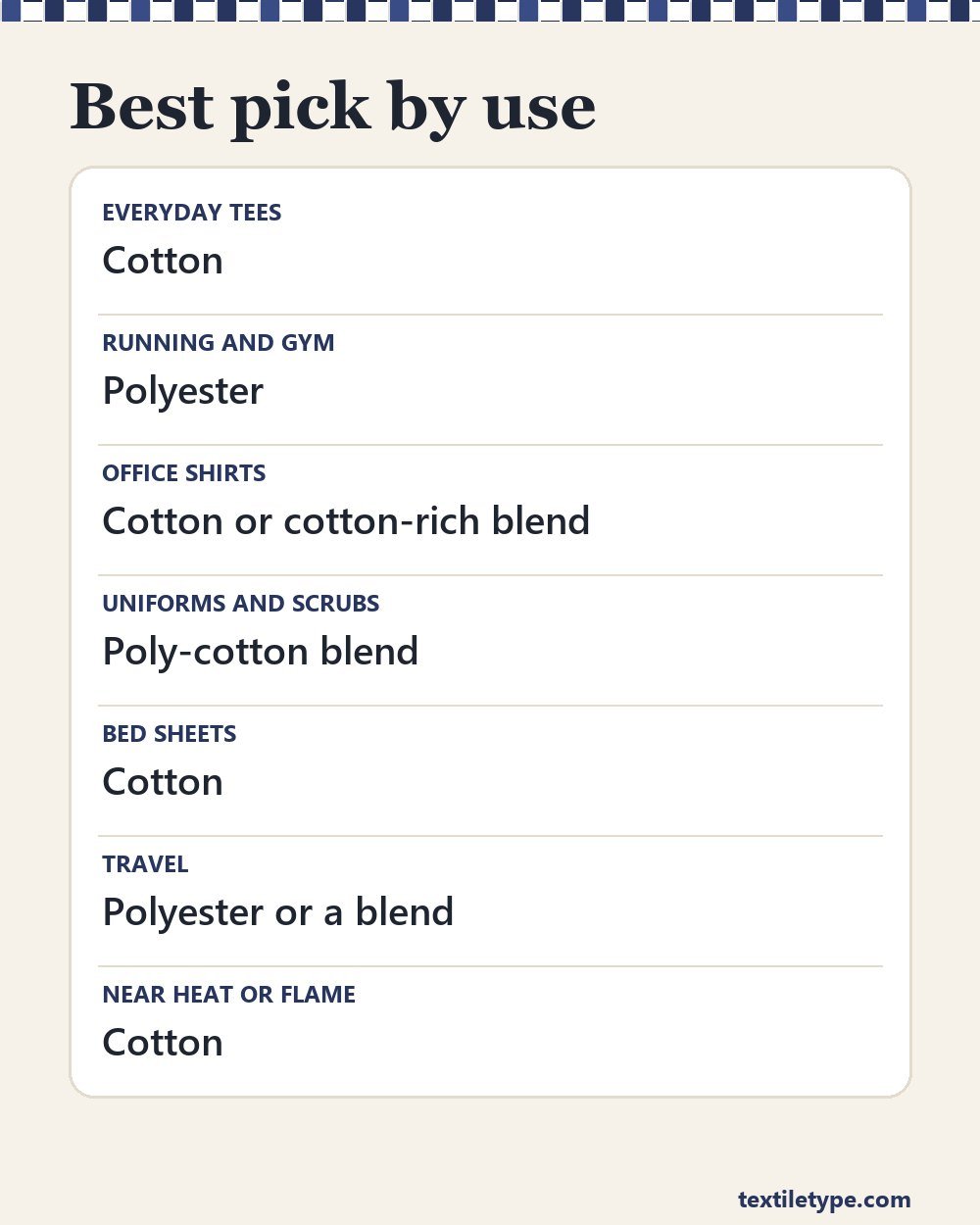
Fiber debates get abstract fast, so start with the job the fabric has to do. These picks reflect how each fiber usually behaves; a well-made blend can beat either one.
| Use | Usual better pick | Why |
|---|---|---|
| Everyday T-shirts and loungewear | Cotton | Soft hand, absorbs moisture, feels less clammy at rest |
| Running, gym and hot workouts | Polyester | Holds little water and dries quickly, so it stays lighter when soaked |
| Office and dress shirts | Cotton or a cotton-rich blend | Breathable feel; a little polyester adds wrinkle resistance |
| Work uniforms and scrubs | Poly-cotton blend | Cotton comfort with polyester’s shape retention and quick drying |
| Bed sheets | Cotton | Absorbent and comfortable against skin all night |
| Travel and packing light | Polyester or a blend | Shrugs off creases and dries overnight in a hotel bathroom |
| Cooking, campfires, welding-adjacent hobbies | Cotton | Polyester melts; cotton chars instead of turning into hot drips |
Polyester vs cotton side by side
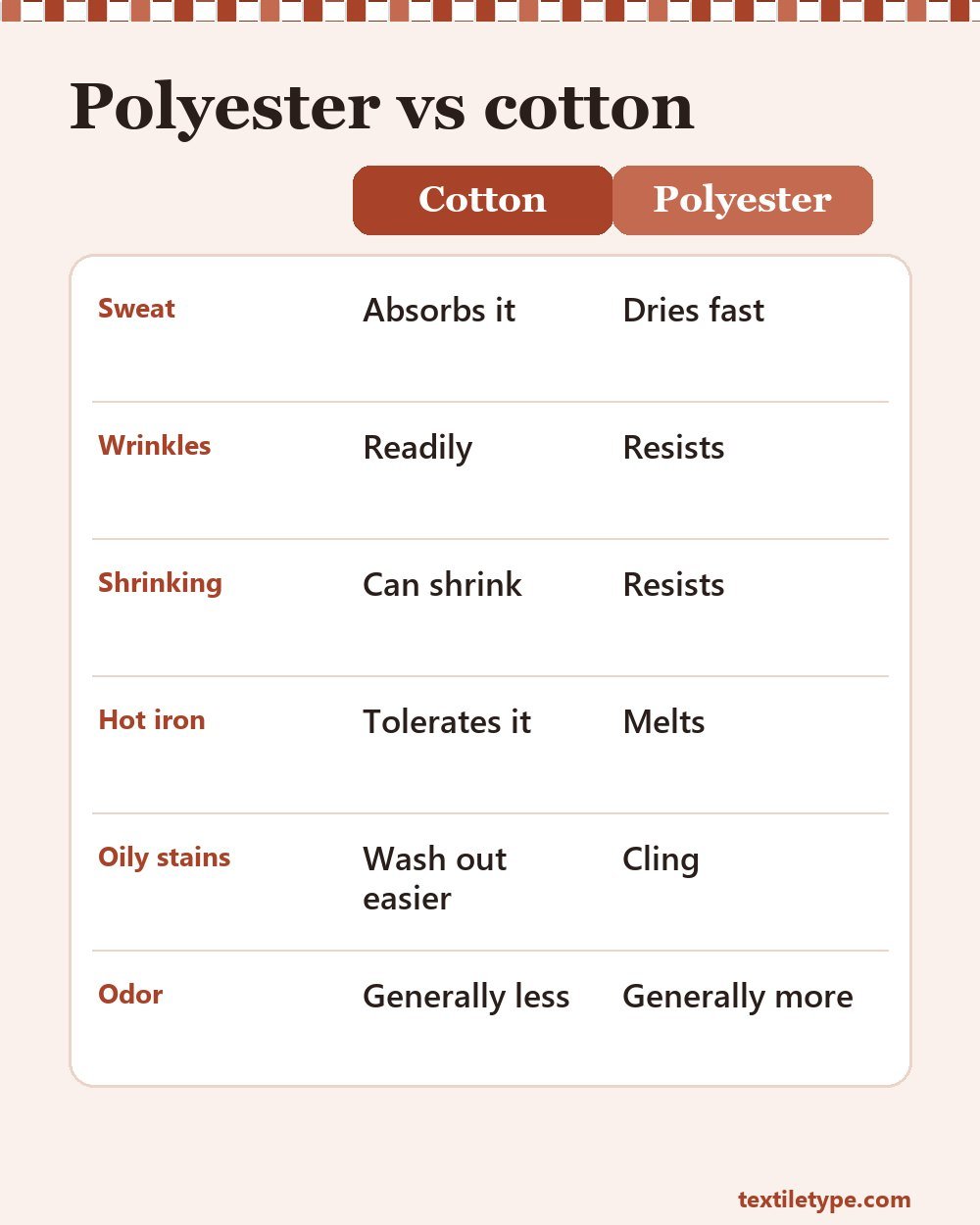
Here is how the two fibers usually compare on the things shoppers actually notice. Treat each row as a tendency, not a promise.
| Property | Cotton | Polyester |
|---|---|---|
| Origin | Plant seed hair (cellulose) | Synthetic polymer, mostly from petroleum feedstocks |
| Moisture regain (water a dry fiber takes up from air) | About 7 to 11% | About 0.4 to 0.8% |
| Drying time | Slow | Fast |
| Wrinkling | Wrinkles readily | Resists wrinkles |
| Shrinking | Can shrink, especially if untreated | Resists shrinking |
| Heat | Takes a hot iron; scorches rather than melts | Softens and melts; PET melts above about 250°C |
| Oily stains | Release fairly easily in water-based washing | Cling to the fiber; pretreat before washing |
| Odor after sweaty wear | Generally less | Generally more |
| Typical price | Moderate | Low |
Sweat, heat and comfort
The biggest difference sits inside the fiber. Cotton is cellulose, and cellulose loves water. Reference tables put cotton’s moisture regain (how much water a dry fiber pulls from ordinary air) somewhere around 7 to 11 percent, while polyester sits under 1 percent. That gap explains nearly every comfort complaint you have ever had about either fabric.
Why cotton feels better at rest
When you are sitting at a desk or sleeping, you release small amounts of moisture all the time. Cotton absorbs that vapor, so the air next to your skin stays drier and the fabric feels pleasant. An older Cotton Incorporated wear study of dress shirts reported that the shirts with more cotton earned higher comfort ratings than polyester-heavy blends. That is an industry group studying its own fiber, so weigh it accordingly, but it matches what most wearers report.
Why polyester wins once you are dripping
Absorbency turns against cotton during hard exercise. A soaked cotton tee gets heavy, clings and takes ages to dry. Polyester holds very little water, so sportswear knits can move sweat outward to the surface where it evaporates. Brands call this moisture wicking, and the fabric structure matters as much as the fiber.
Odor and stains
Polyester has two quiet habits that annoy people more than any comfort score: it can hold body odor, and it grabs oily stains.
On odor, research from textile scientist Rachel McQueen, described by the University of Alberta, compared polyester, cotton and merino wool T-shirts after wear and found polyester the smelliest of the three. If your gym shirts smell even after washing, the fiber is part of the story.
On stains, an Iowa State University extension fact sheet calls polyester and other synthetics oleophilic, meaning they bond readily with oils. Household washing is water-based, so salad dressing or skin oil can survive a wash cycle on polyester when the same spot would rinse out of cotton. Pretreat oily marks with a heavy-duty liquid detergent before washing, check the spot while the garment is still wet, and keep it out of the dryer until it is gone.
Wrinkles, shrinking and wear
Here polyester earns its keep. Britannica describes it as resistant to stretching, shrinking and wrinkling, and quick to dry. That is why the polyester shirt you forgot in the dryer looks fine, and the cotton one looks like a paper bag.
Cotton’s absorbency has a care cost. Fibers swell when wet and relax as they dry, so cotton creases and can shrink, especially in a hot dryer. Preshrunk cotton and tighter knits reduce the problem. For more care help, browse the laundry guides in our fabric guides hub.
Heat is cotton’s revenge. Polyester is a thermoplastic: according to standard references its glass transition begins somewhere around 67 to 81°C and it melts above roughly 250°C, so a hot iron can leave a shiny scorch or a melted patch. Cotton tolerates the highest iron settings and, when it does burn, it chars to ash instead of melting into beads.
Pilling depends more on yarn and construction than fiber, but polyester pills are harder to shed because the fiber is strong. Cheap spun-polyester fleece is the usual offender.
Polyester or cotton for shirts
Shirts are where most people meet this decision, so here is the breakdown by shirt type.
T-shirts
For daily wear, cotton or a cotton-rich blend in a single jersey knit is the comfortable default. A 100 percent polyester tee makes sense for running, team sports and hot hikes.
Dress and work shirts
Woven cotton shirts breathe well and press crisply. Many easy-care shirts add some polyester to reduce ironing. If you hate ironing more than you hate a slightly synthetic feel, the blend is a fair trade.
Shirts for hot, humid days
Here the answer splits. Sitting at an outdoor table, a loose cotton or linen shirt usually feels better. Hiking uphill in the same heat, quick-drying polyester tends to stay lighter on your back.
Poly-cotton blends: the middle path
Blending the two fibers aims to keep cotton’s comfort and add polyester’s strength, quick drying and wrinkle resistance. US labels must list the generic fiber names with their percentages by weight, so a tag reading 60% cotton, 40% polyester tells you cotton is the larger share.
As a rough guide, the higher the cotton share, the more the fabric behaves like cotton (softer and more absorbent, more prone to wrinkles), and the higher the polyester share, the more it behaves like polyester. Blends are common in uniforms, budget sheets and sweatshirts for exactly that reason.
The environmental trade-offs
Neither fiber gets a clean bill of health, and anyone who tells you otherwise is selling something. Scale first: Textile Exchange’s 2025 Materials Market Report puts polyester at 59 percent of the 132 million tonnes of fiber produced in 2024, with cotton at 19 percent.
Polyester comes mostly from fossil feedstocks, and synthetic textiles shed tiny fibers in the wash. A 2017 IUCN study estimated that almost two-thirds of the primary microplastics reaching the oceans come from washing synthetic textiles and from tire abrasion combined. Recycled polyester exists, but it is still a minority of polyester production.
Cotton is biodegradable, yet growing it can take a lot of water and farm chemicals depending on where and how it is grown. The fairest summary is that wearing any garment longer does more good than switching fibers.
Choose polyester if, choose cotton if
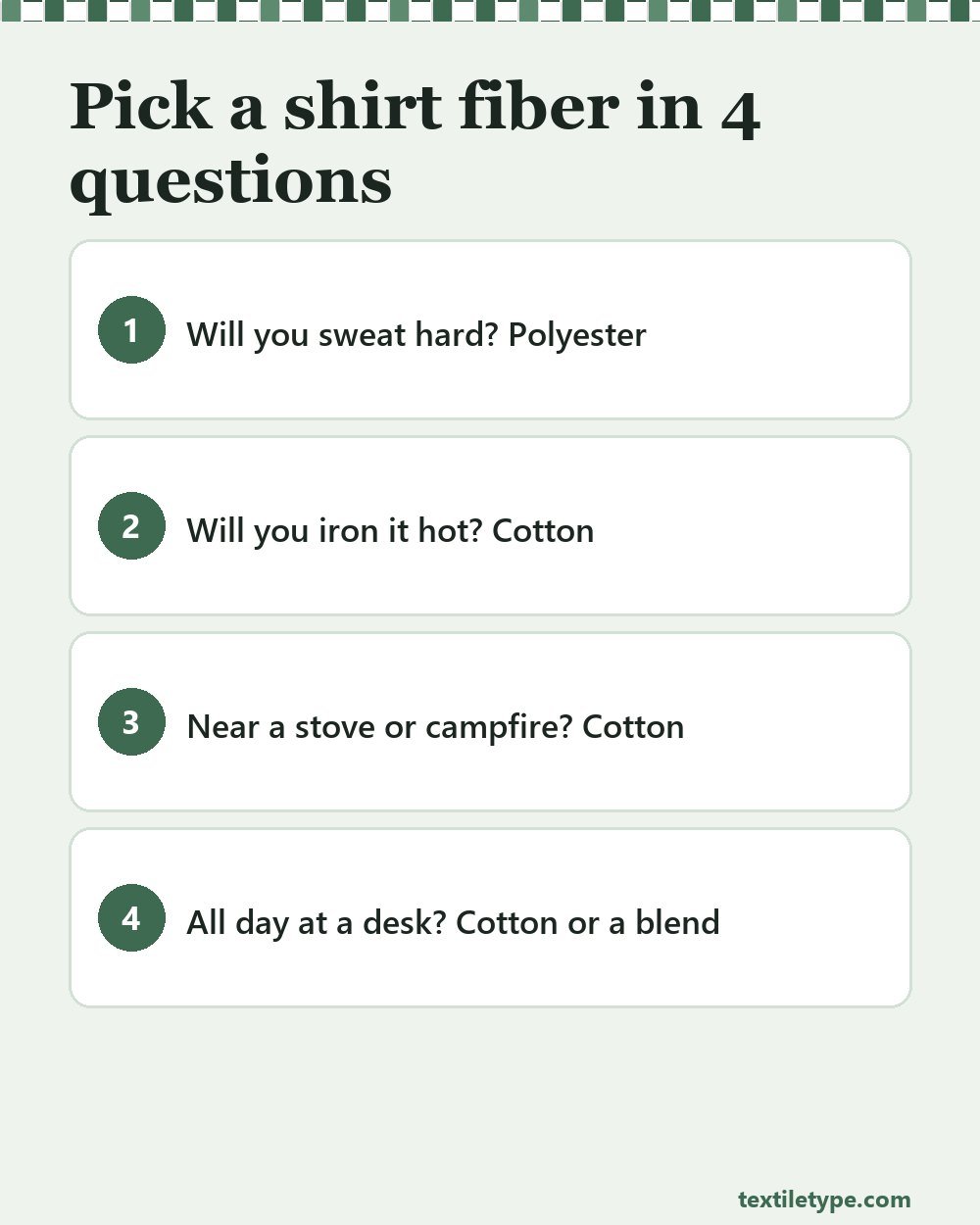
Choose polyester if:
- You sweat heavily and need a shirt that dries fast.
- You travel, live out of a bag or refuse to iron.
- You want bright colors that hold up and a low price.
- The garment will be worn for sport or outdoor activity in wet conditions.
Choose cotton if:
- Comfort against bare skin is the priority, including in bed.
- You notice odor in synthetic shirts.
- The item will meet a hot iron, a stove or a campfire.
- You want a natural fiber that biodegrades at end of life.
Still torn? Compare the drape and weave of the specific cloth too. A soft cotton twill and a thin polyester knit are different animals even before fiber enters the conversation.
A blank-apparel supplier walks through how cotton and polyester T-shirts differ, which helps if you buy tees in bulk or for printing.
A running-focused take on whether cotton or polyester T-shirts are the better choice for runs.
Polyester vs cotton FAQ
Is polyester or cotton better for hot weather?
For relaxed wear in heat, cotton usually feels better because it absorbs moisture and does not feel clammy. For hard exercise in heat, polyester tends to win because it dries quickly. Loose fit and a light, open weave matter as much as fiber.
Why do polyester clothes smell more than cotton?
Studies of worn T-shirts, including work described by the University of Alberta, found polyester held body odor more than cotton or merino. Synthetic fibers also bond with skin oils, which can trap smells through washing.
Is a cotton-polyester blend better than 100% cotton?
It depends on the job. A blend usually wrinkles and shrinks less and dries faster, while pure cotton usually feels softer and breathes better against skin.
Does polyester last longer than cotton?
Polyester fibers are strong and hold their shape, so polyester garments often look new longer. Cotton can last for years too, especially in sturdy weaves, but it tends to fade, shrink and wrinkle more along the way.
Sources and further reading