Nylon was one of the first fully synthetic fibers to reach ordinary shoppers, and it got there by way of stockings, toothbrushes and parachutes. Today it hides in your rain shell, leggings, backpack, swimsuit and carpet. This guide explains what is nylon fabric, where its famous toughness comes from, which jobs it does better than anything else, and the question shoppers ask most: is nylon waterproof?
Spoiler for the impatient: the fiber is tough and slow to absorb water, but a nylon fabric only becomes waterproof when someone adds a coating or a membrane.
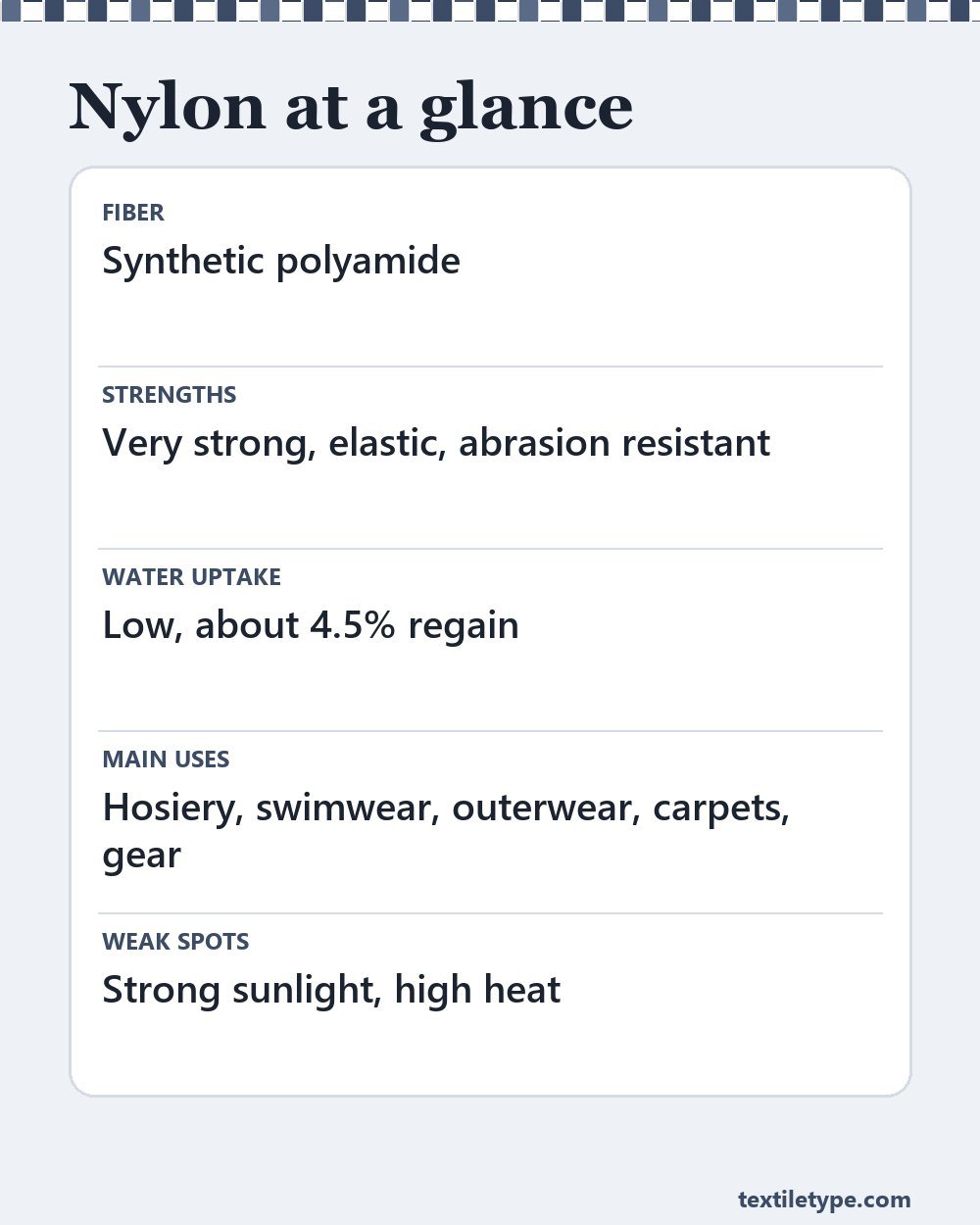
Nylon at a glance
- Fiber type
- Synthetic polyamide
- Common types
- Nylon 6,6 and nylon 6
- Water uptake
- Low, about 4.5% commercial moisture regain
- Best traits
- Very strong, elastic, abrasion resistant
- Weak spots
- Sunlight, high heat, static, picks up dye
- Waterproof?
- Only with a coating, laminate or membrane
On this page
What is nylon fabric made of?
Nylon is a polyamide, a plastic whose long molecular chains are stitched together by repeating amide links. The Federal Trade Commission’s labeling definition is a manufactured fiber made from a long-chain synthetic polyamide in which less than 85 percent of those amide links attach directly to two aromatic rings. That last clause exists to separate nylon from aramids, its much stiffer high-performance cousins.
Two kinds of nylon cover most of what you’ll wear:
- Nylon 6,6 is the original DuPont recipe, built from two different six-carbon building blocks (hexamethylenediamine and adipic acid).
- Nylon 6 is built from a single ring-shaped building block called caprolactam. Paul Schlack at IG Farben in Germany first made it in 1938, partly to get around DuPont’s patent, and it was sold there as Perlon.
On a clothing label, both just say “nylon”, or “polyamide”, the name used in much of the world. To the wearer they behave much alike.
Like polyester, nylon is melt spun: the polymer is melted, pushed through the tiny holes of a spinneret and cooled into filaments, which are then drawn (stretched) to line up the molecules and multiply their strength. Nylon is a much smaller player, though. Textile Exchange puts polyamide at about 5 percent of global fiber output in 2024, compared with polyester’s dominant share, and recycled nylon remains a small slice of that.
Nylon’s history in six dates
Nylon’s backstory reads like a corporate thriller with a hosiery subplot.
- February 1935. A team led by chemist Wallace Carothers at DuPont’s Experimental Station in Delaware first makes nylon 6,6. Carothers died before nylon was ever announced.
- February 1938. The Dr. West’s Miracle-Tuft toothbrush goes on sale with DuPont nylon bristles, one of the first products to use the new material.
- October 27, 1938. DuPont publicly announces its new fiber and its name, “nylon”.
- 1939. DuPont begins the first US commercial production of nylon fiber, at Seaford, Delaware.
- May 1940. Nylon stockings go on sale nationwide and demand outruns supply.
- February 1942. Stockings vanish from stores as DuPont sends its nylon output to the war effort: parachutes, ropes and nets.
The wartime shortage helped make nylon the symbol of postwar plenty, and the word “nylons” still means stockings to plenty of people.
Decades TV Network’s short history segment on nylon as an early synthetic fiber.
Nylon uses: where the toughness goes
The American Fiber Manufacturers Association lists nylon’s core traits as exceptionally strong, elastic, abrasion resistant, lustrous, resilient and low in moisture absorbency. That combination sends it to three very different places.
| Category | Typical nylon uses | Why nylon gets the job |
|---|---|---|
| Clothing | Hosiery, lingerie, swimwear, cycle wear, ski apparel, windbreakers, raincoats | Stretch, recovery, smooth hand, light weight |
| Home | Carpets, rugs, upholstery, bedspreads | Resilience and abrasion resistance under foot traffic |
| Outdoor gear | Tents, tarps, sleeping bags, backpacks | High strength for very little weight |
| Industrial | Tire cord, seat belts, air bags, parachutes, ropes, nets, hoses | Strength and shock absorption |
| Small stuff | Thread, fishing line, racket strings, dental floss | Smooth, strong monofilament |
Outdoor gear often describes nylon fabric by denier (D), a measure of yarn thickness, rather than by fabric weight. A low-denier shell is thin and light; a high-denier pack fabric is heavier and built to be dragged over rock. For woven and knit fabrics in general, GSM is the more useful weight figure.
Is nylon waterproof?
Plain nylon fabric is water resistant at best. The fiber absorbs a little water (its commercial moisture regain value is about 4.5 percent, versus about 0.4 percent for polyester), and the gaps between yarns in any woven fabric let water through once it’s under pressure from wind, a backpack strap or a wet seat.
Waterproof nylon gear is built in layers, and REI’s rainwear guides draw the distinctions clearly:
- Water repellent (DWR). A durable water repellent finish coats the individual fibers so rain beads up and rolls off. It does not make a fabric waterproof on its own, and it wears off with use.
- Coated. A layer such as polyurethane or silicone is applied to one side of the nylon, sealing the gaps.
- Laminated. A thin waterproof, breathable membrane is bonded to the nylon face fabric, which protects the delicate membrane.
- Seam sealed. Every needle hole is a leak, so a fully waterproof jacket or tent also needs taped or sealed seams.
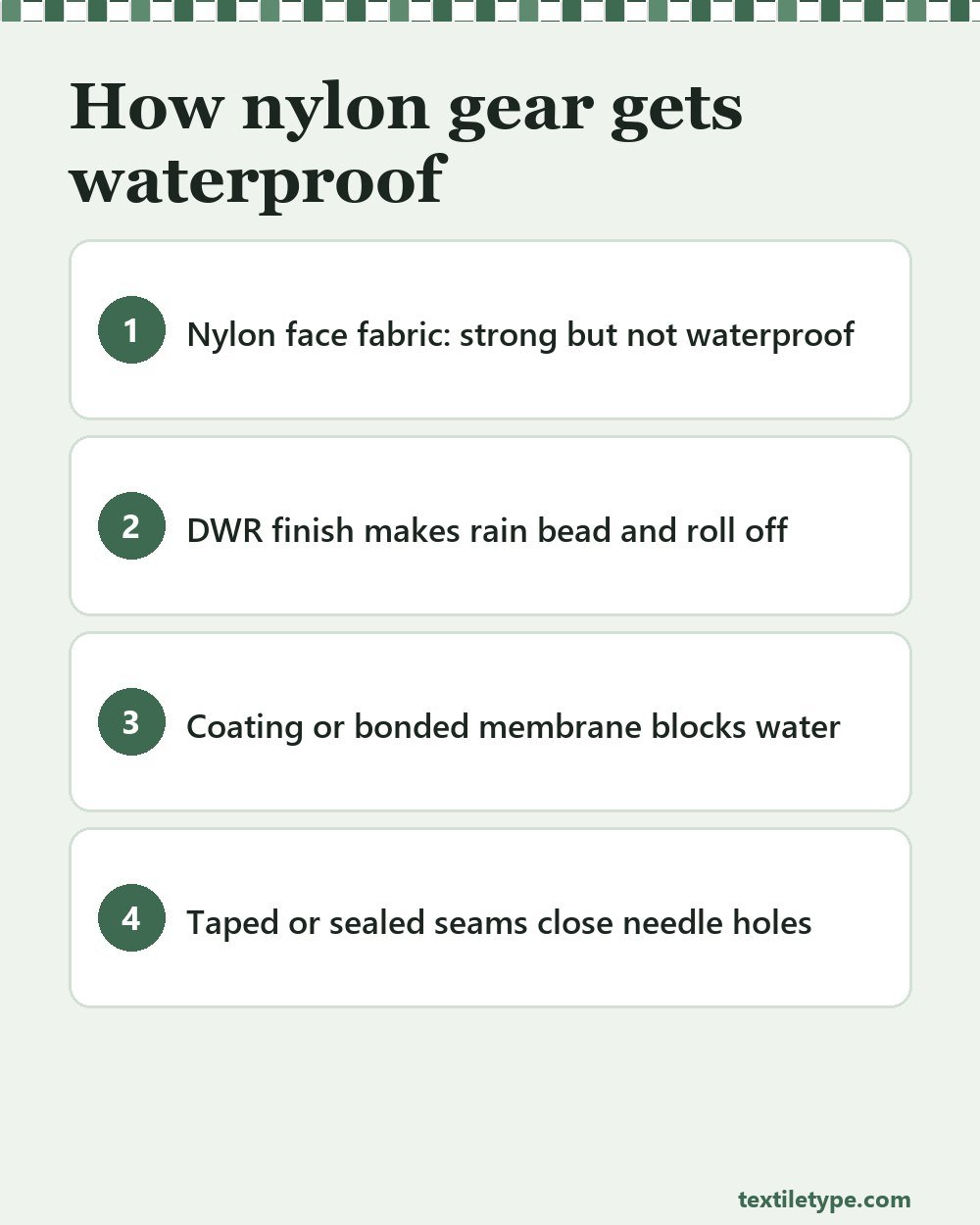
So when a label says “100% nylon” on a rain jacket, the waterproofing lives in the coating or membrane, which is usually listed separately or described in the product details. If a jacket only says “water resistant” or “DWR finish”, expect it to handle a shower, not a day of steady rain.
One more wrinkle for campers: because nylon takes up some water, tent makers note that nylon flies tend to stretch and sag slightly when wet, which is one reason some brands switched to silicone-coated polyester.
TexConnect explains how waterproof breathable fabrics work, the same membrane idea used in many nylon shells.
Nylon vs polyester: which synthetic for which job
Nylon and polyester look alike on a hanger and get swapped constantly, but they’re different polymers with different habits. Our polyester guide covers that fiber in depth; here’s the head-to-head.
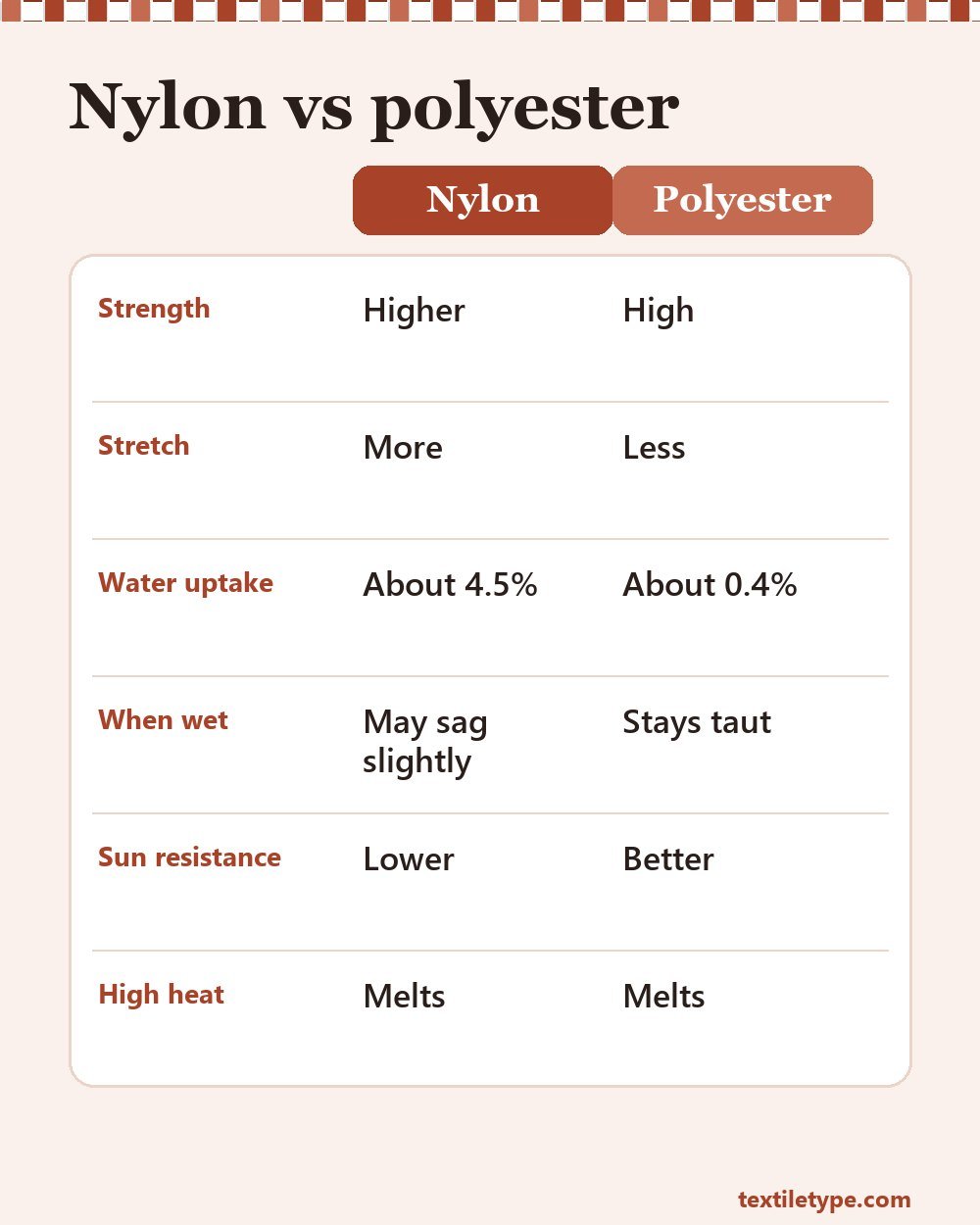
- Pick nylon for stretch and recovery (swimwear, leggings, hosiery), abrasion (pack bottoms, carpets) and the most strength per gram.
- Pick polyester for long sun exposure (flags, awnings, outdoor cushions) and the quickest drying.
- Either works for windbreakers and fleece, where construction and finish matter more than the fiber.
If your real comparison is synthetic against natural, our polyester vs cotton breakdown is the better starting point. For soft, absorbent next-to-skin wear, a cellulose fiber like modal behaves very differently from either synthetic.
Nylon’s strengths and weak spots
The University of Georgia Extension describes nylon as extremely strong and durable, resilient, highly elastic and resistant to abrasion, mildew and insects. Its list of drawbacks is just as specific: it builds static, absorbs little moisture, can gray or yellow with age, holds body oils, pills, and is sensitive to strong sunlight and heat.
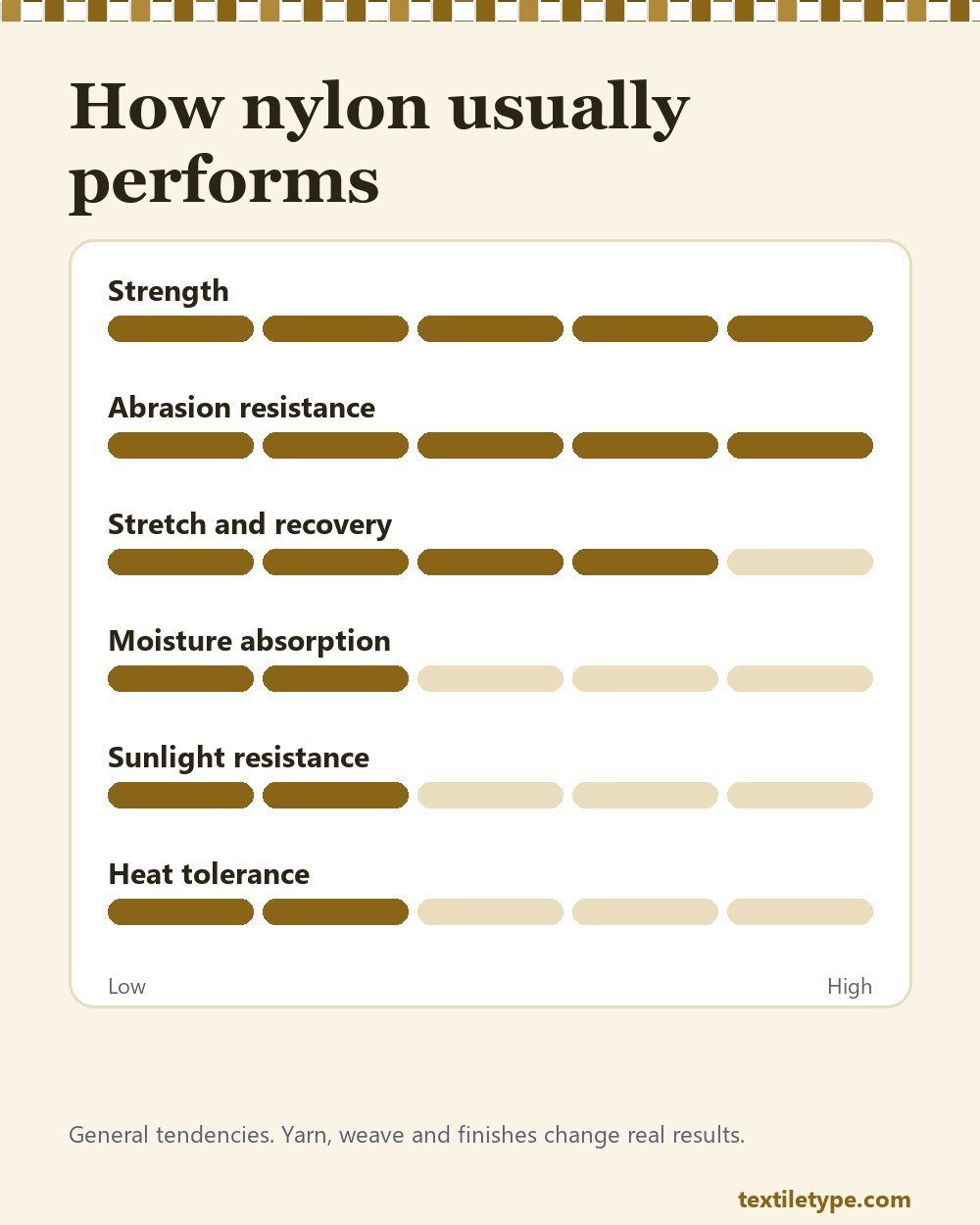
What that means day to day:
- Nylon leggings and swimsuits snap back after stretching, which is why they hold their fit.
- A nylon tote or jacket survives scuffs that would fuzz a cotton one.
- Gear left on a sunny balcony or car dashboard weakens and fades faster than you’d expect.
- White nylon picks up dye from colored laundry easily and dulls over time.
- Pills that do form tend to cling, because the strong fibers anchor them.
Caring for nylon clothes and gear
Day-to-day nylon care is easy. The rules mostly protect it from heat, sunlight and dye transfer.
- Wash cool to warm on a normal or gentle cycle; delicate hosiery and lingerie do best in a mesh bag.
- Separate whites. UGA Extension’s advice is plain: don’t wash white nylon with colors.
- Pretreat oily marks such as sunscreen and body oil before washing, since nylon holds onto them.
- Use oxygen bleach, not chlorine, if whites need brightening.
- Dry low or hang, out of strong sun. Nylon dries quickly anyway.
- Iron rarely and low, with a press cloth.
For waterproof shells, follow the maker’s label, which usually means a technical wash rather than regular detergent. REI’s advice is to refresh the DWR with a wash-in or spray-on treatment when rain stops beading on the surface or the fabric shows dark, wet-looking patches.
When in doubt about any nylon blend, check the other fiber too: a nylon and spandex swimsuit, for example, needs the gentler care that spandex calls for. For more fibers, see all our fabric guides.
Nylon fabric FAQ
Is nylon a natural or synthetic fabric?
Nylon is fully synthetic. It’s a polyamide plastic made from petrochemical building blocks and melt spun into fibers, with no plant or animal source.
Is nylon breathable?
Not very, in most fabrics. The fiber absorbs little moisture, and tightly woven nylon blocks airflow, although open knits and mesh panels in activewear help a lot.
Does nylon shrink?
Usually not much in normal washing, but high heat can distort or melt it. Wash cool to warm and use a low dryer setting or hang it to dry.
Is nylon stronger than polyester?
Nylon fiber is generally stronger and stretchier, but it loses some ground when wet and degrades faster in sunlight. For gear that lives outdoors, polyester often lasts longer.