Sateen is the reason some cotton sheets feel cool and buttery the first night you sleep on them, while others feel crisp like a fresh shirt. The fiber can be identical. The difference is the weave, and sateen’s weave is built to show off a smooth, low-gloss face.
So, what is sateen fabric? It is a cloth woven in a satin-type structure from spun yarns, most often cotton, so long yarn “floats” sit on the surface and give it a soft sheen. This guide explains how to recognize it, what the label is really telling you, who sateen sheets suit (and who will kick them off by 2 a.m.), why sateen pills and how to wash it so the sheen lasts.
Sateen at a glance
- What it is
- A satin-type weave made with spun (short-fiber) yarns
- Usual fiber
- Cotton; polyester, lyocell and blends also exist
- Look
- Soft sheen on the face, matte on the back
- Feel
- Smooth, heavy drape, cool to the first touch
- Best known for
- Bed sheets and duvet covers
- Weak spot
- Floats can pill, snag and lose their sheen with age
On this page
What is sateen fabric? Satin’s cotton cousin
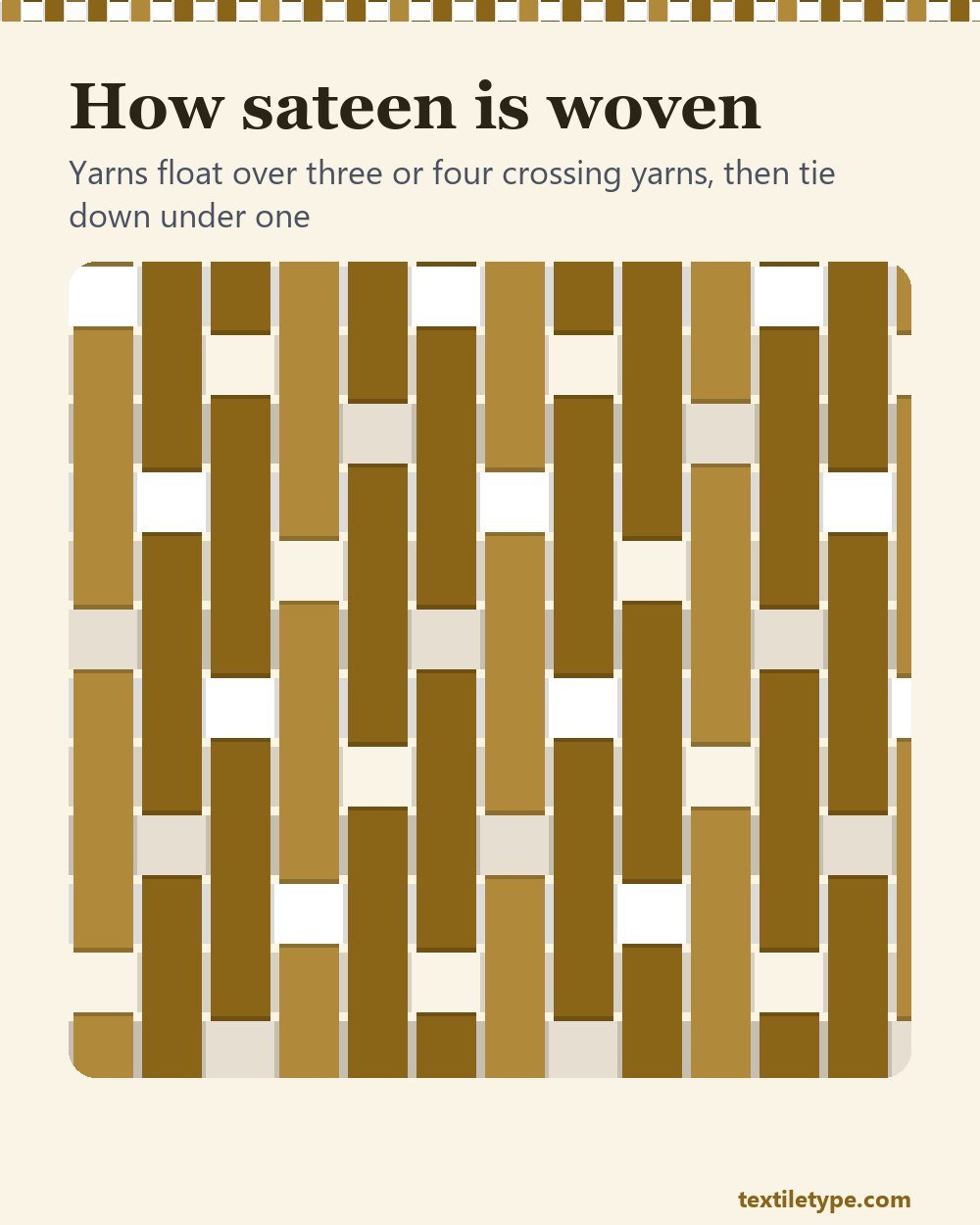
Every woven cloth is made of two sets of yarn: the warp, which runs the length of the fabric, and the filling (also called weft), which runs across it. In the simplest weave, plain weave, each yarn goes over one and under one, like a checkerboard. Sateen breaks that rhythm. One set of yarns skips over several crossing yarns, usually three or four, before dipping under a single one. Those long skips are called floats, and a surface made mostly of floats is smooth enough to reflect light.
If that sounds like satin, it should. Sateen uses the same family of weave as satin fabric; the difference is the yarn. Satin is usually woven from long, continuous filament yarns such as silk or polyester, which produce a bright, slick gloss. Sateen uses spun yarns, made by twisting short staple fibers like cotton together, so the surface has a gentler, pearly glow and a softer hand.
Textbook definitions add one more detail: classic satin is warp-faced (the lengthwise yarns form the floats), while sateen is described as filling-faced, with the crosswise yarns floating. In shops the word is used more loosely, and you will see “sateen” on almost any spun-yarn fabric with a satin-type face, whichever direction the floats run. For shopping purposes, the yarn type is what separates sateen from satin.
A short fabric-construction lesson on the sateen weave, useful if you want to see how the floats are laid out.
How to spot sateen in ten seconds
Packaging does not always say “sateen” clearly, and online photos flatten everything. These checks work on a fabric bolt, a sheet set in a store, or a garment you already own.
- Compare both sides. Sateen has a distinct face with a soft sheen and a flatter, duller back. A plain weave such as percale looks the same on both sides.
- Tilt it toward a light. The sheen brightens and fades as you change the angle, because the floats reflect light in one direction.
- Run your palm across it. Sateen feels slick and almost cool; a plain weave feels drier and a touch grainier.
- Let it hang. Sateen is usually heavier for its size than percale, so it falls in soft, weighty folds.
- Look closely at the surface. With a magnifier you can see yarns lying side by side in long runs instead of a tight over-under grid.
- Check the shine level. A glassy, mirror-like gloss points to filament satin (often polyester); a muted glow points to spun-yarn sateen.
Sateen vs cotton: decoding the label
People often search “sateen vs cotton” as if they were rivals. They are not on the same axis. Cotton is a fiber; sateen is a way of weaving it. Most sateen is cotton, but sateen can also be woven from polyester, rayon, lyocell or blends, and the fiber changes how it sleeps and wears far more than the name suggests. Read the fiber line before the marketing line.
| Label says | What you are getting | What to expect |
|---|---|---|
| 100% cotton sateen | Cotton yarns in a sateen weave | Absorbent, soft sheen, wrinkles less than percale |
| Mercerized cotton sateen | Cotton treated with caustic soda, often under tension | Extra luster and richer dye color |
| Polyester or “microfiber” sateen | Synthetic fibers in a sateen-type weave | Cheaper and wrinkle resistant, but absorbs very little moisture |
| Cotton/polyester sateen | A blend in the same weave | Somewhere between the two; check the percentages |
| Lyocell or rayon sateen | Regenerated cellulose fibers in a sateen weave | Very smooth and drapey; usually needs gentler washing |
| Stretch sateen | Usually cotton with a small amount of spandex | Common in pants and fitted skirts, not sheets |
Why mercerized sateen glows
Mercerization is a finishing treatment for cotton. John Mercer devised it in 1844, treating cotton with a strong sodium hydroxide solution and noting that it made the cloth stronger and more receptive to dye. The silky luster people now associate with the process came later: it depends on holding the cotton under tension during treatment, a refinement credited to Horace Lowe around 1889 or 1890. The tension helps the fibers swell into rounder shapes that reflect more light, which is why mercerized sateen often looks a shade brighter than untreated sateen.
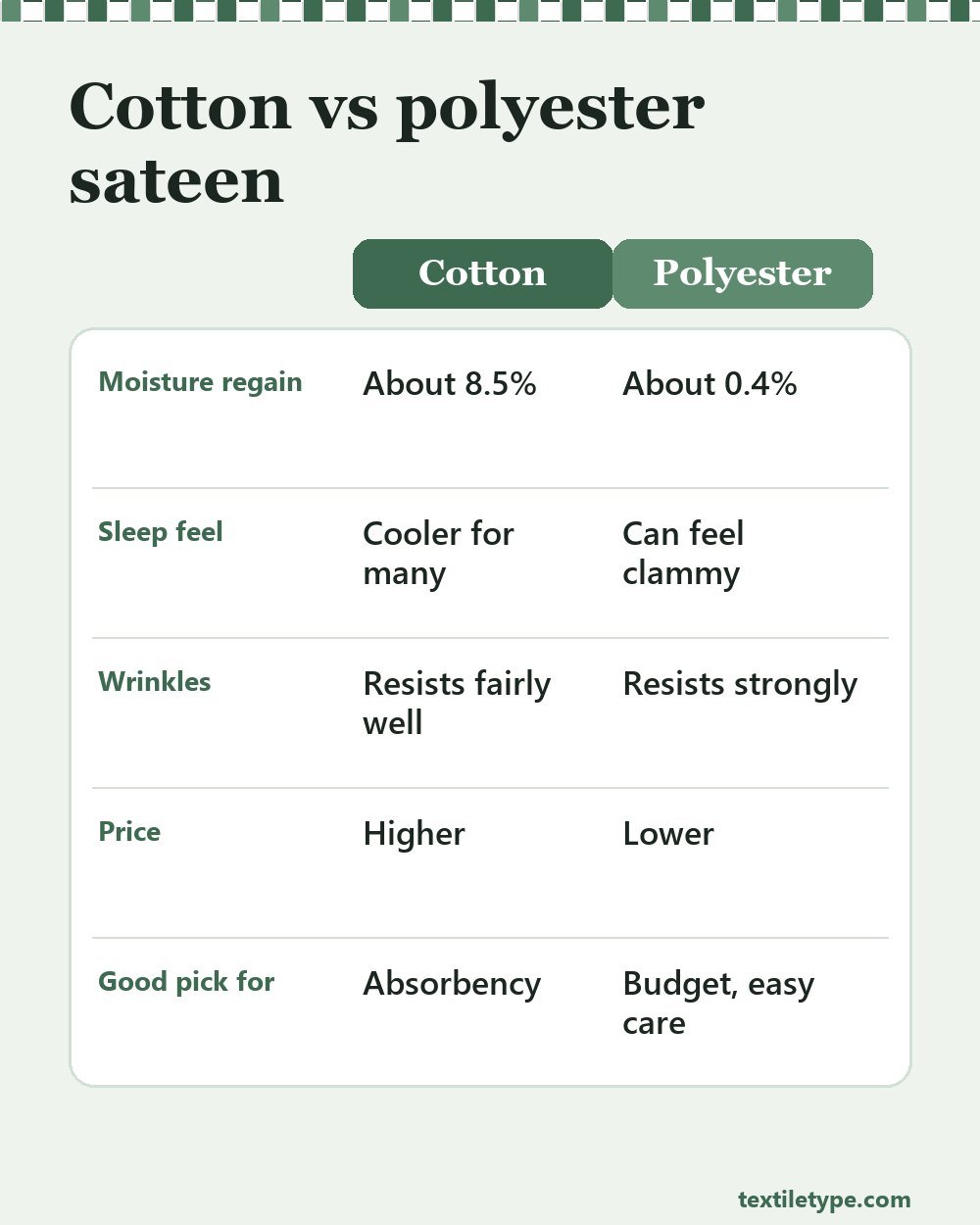
The moisture gap is large. Standard moisture regain figures put cotton at about 8.5% and polyester at about 0.4%, which is why polyester sateen can feel warm and clammy on humid nights. Our polyester guide explains that fiber in more detail.
Sateen sheets: who they suit
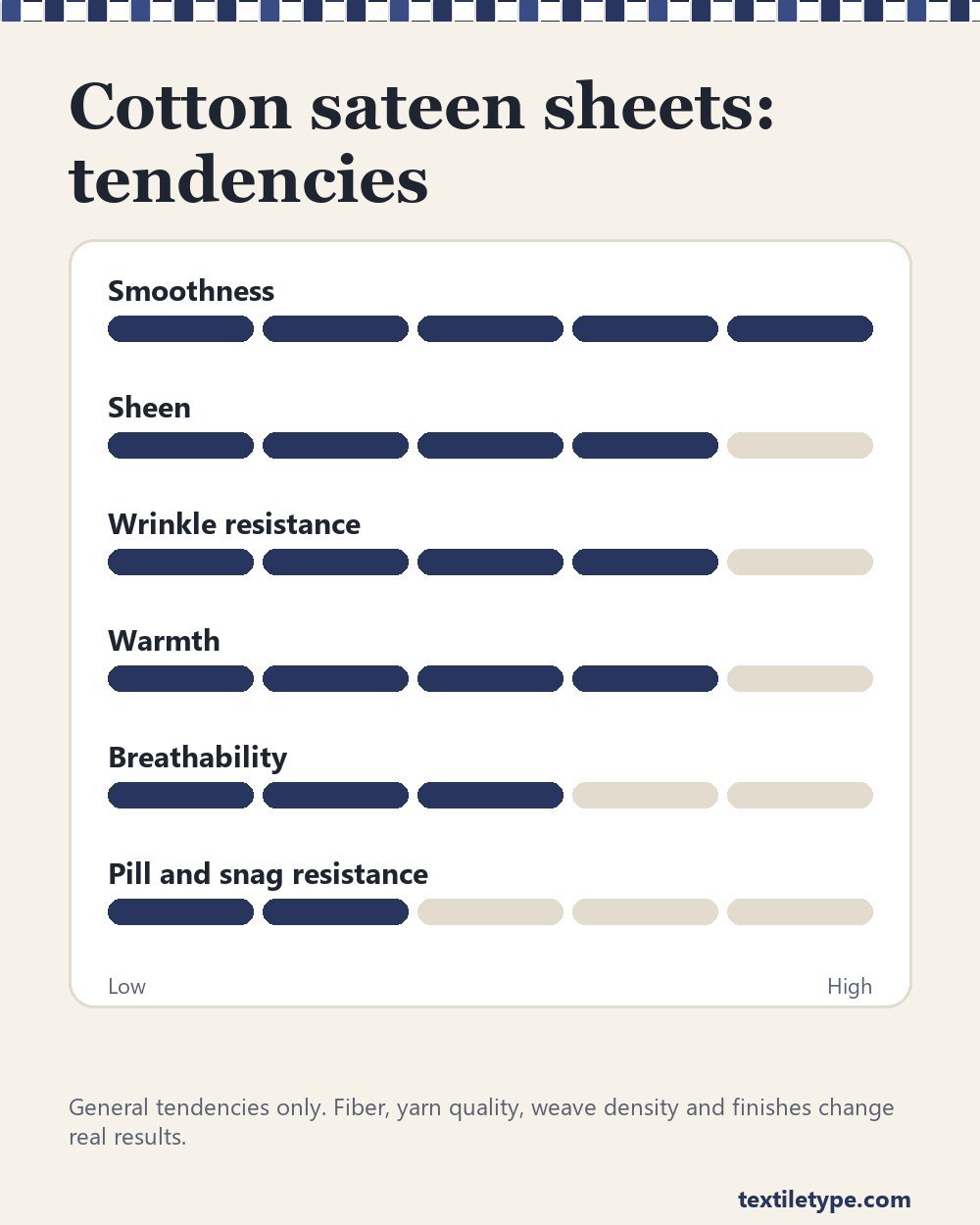
Sateen sheets are a feel decision more than a quality decision. A well-made percale and a well-made sateen can both last for years. What changes is the experience: sateen starts out silky, drapes over you instead of tenting, and stays smoother out of the dryer. It is also heavier and tends to hold more heat. The thread count guide covers how percale and sateen compare at the same count; here is the short decision version.
Pick sateen if…
- You want sheets that feel silky from the first night, without waiting for them to soften.
- You sleep cool or your bedroom is chilly.
- You hate ironing and like a smooth-looking bed straight from the dryer.
- You like a weighty sheet that drapes rather than a light one that crinkles.
Skip sateen if…
- You sleep hot or live without air conditioning; a crisp plain weave or linen usually feels airier.
- You have pets with claws, or rough heels, since floats snag more easily than a tight grid.
- Slippery bedding bothers you; some sleepers find sateen sheets slide and bunch.
- You want the longest-lasting option on a tight budget.
Pilling, snags and fading sheen
The same floats that make sateen feel lovely are its weak spot. A yarn lying across four others has more of its length exposed to friction than a yarn that ducks under every other thread. Over years of tossing and turning, that exposure shows up in a few predictable ways.
- Pilling. Loose fiber ends work free and twist into small balls, especially where you rub the most (the foot of the fitted sheet, the pillowcase).
- Snags. A toenail, a ring or a cat claw can hook a float and pull it into a loop.
- Dulling. Sleep Foundation notes that sateen’s sheen may fade with age; heat and harsh washing speed that up.
- Fraying. Cut edges ravel faster than on plain weaves, and sateen is generally considered less durable than a plain weave of similar quality.
Longer-staple cotton helps, because longer fibers leave fewer loose ends to work free. So does gentle laundering, covered next. None of this makes sateen fragile in daily life. It simply means sateen ages with a softer, slightly fuzzier face, while percale ages by getting softer and thinner.
Washing sateen sheets so the sheen lasts
Most cotton sateen sheets are machine washable. The goal is to limit heat and friction, the two things that rough up floats. Always check the care label first, since blends and finishes vary.
- Wash new sheets before first use, as many makers suggest, and expect a little shrinkage the first time.
- Use a gentle or normal cycle with a mild liquid detergent, and do not overload the drum.
- Separate them from towels, jeans and anything with zippers or hooks, which grind and snag the face.
- Skip chlorine bleach on colored sateen; an oxygen bleach is the gentler choice when whites need brightening.
- Tumble dry low, or use an air setting if your dryer has one, and pull the sheets out while barely warm.
- Smooth and fold right away. Sateen resists wrinkles, but a sheet left balled up in the dryer will still crease.
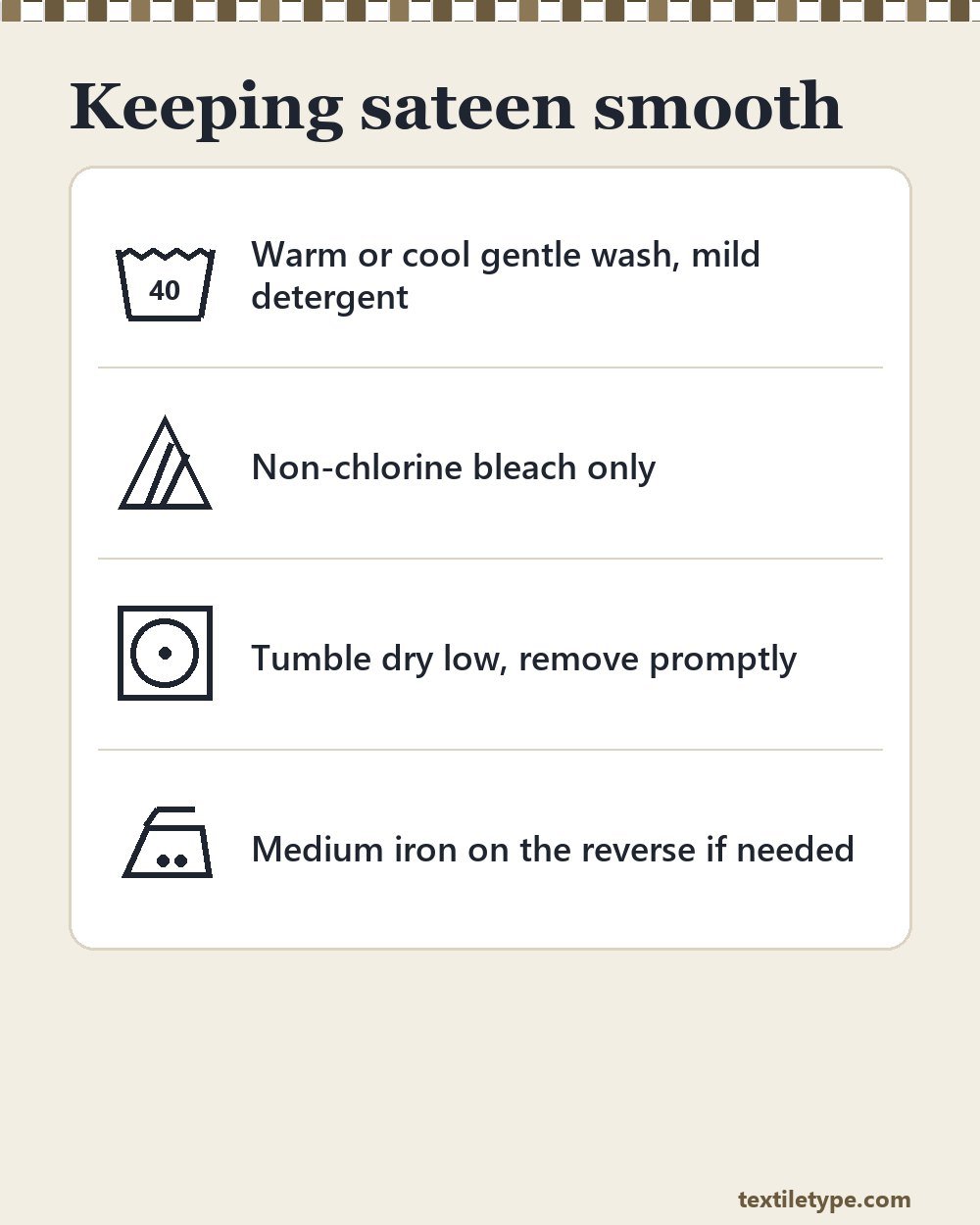
If you iron sateen at all, press the back side so the face keeps its even sheen.
Sateen beyond the bedroom
Sheets get the attention, but sateen also turns up in drapery linings, duvet covers, cushion covers and clothing. Cotton sateen makes structured skirts, fitted dresses and trousers with a subtle polish, and its dense weave makes it a good choice for jackets that need to block a breeze. Stretch sateen, with a small percentage of spandex, is a staple for slim pants because it moves with you while keeping a smooth face.
Sewing with sateen
- Mark the right side on every cut piece with chalk or tape. The face and back are easy to confuse at the machine.
- Cut everything in one direction, since the sheen changes with the angle of light and mismatched pieces can look like two shades.
- Prewash cotton sateen the way you will wash the finished item.
- Finish seams with a serger, a zigzag or a French seam, because sateen frays readily.
- Press from the wrong side or under a press cloth to avoid shiny patches.
A fabric masterclass on sateen that walks through how to sew it.
Want to compare sateen with its neighbors? The full list of Textile Type fabric guides covers weaves and fibers one by one.
Sateen FAQ
Is sateen 100% cotton?
Not always. Most sateen sheets are cotton, but polyester, lyocell, rayon and blended sateens are common. The fiber content line on the label tells you which one you have.
Is sateen the same as satin?
They share a satin-type weave, but satin usually uses filament yarns like silk or polyester, while sateen uses spun yarns like cotton. Sateen has a softer, lower sheen.
Are sateen sheets hot to sleep on?
They tend to feel warmer than percale because the weave is denser and heavier. Cotton sateen breathes better than polyester sateen, but hot sleepers often prefer a crisp plain weave.
Why are my sateen sheets pilling?
The long surface floats expose more fiber to friction, so loose fiber ends twist into pills. Cooler washes, low drying heat and keeping sheets away from rough laundry slow it down.
Sources and further reading